Guides
Fermentation business British Columbia: which health approvals apply and who issues them
A fermentation business in British Columbia needs an approved premises and a health authority permit before it sells. Here are the approvals, the regulation behind them and the records an inspector expects.
What to take away
- A home kitchen is generally not an approved food premises in British Columbia, so a fermentation business usually starts with an approved commercial space.
- The regional health authority for the kitchen's location issues the food premises permit under the BC Food Premises Regulation, B.C. Reg. 210/99.
- Each permit application needs a written food safety plan and a sanitation plan, approved by the health authority before you open.
- Acidified and low-acid products need pH control. A pH of 4.6 is the common dividing line, and the validated target for each product comes from your health authority.
- Labels follow federal rules set by the CFIA, and a provincial permit does not replace them.
The permit comes before the recipe
Selling fermented food made in a home kitchen generally needs an approved premises in British Columbia. That fact decides the first stage of the business, so confirm the current position with the health authority for your address before you plan around a home setup.
Which ferment is easiest to permit?
What are you making?
Refrigerated live kraut -> shorter testing path
Shelf-stable jar -> longer testing path
Before you lease anything, list every product you plan to make. Sauerkraut, kimchi, hot sauce, kombucha and miso do not carry the same testing load. A refrigerated live kraut and a shelf-stable jar follow different paths, so the list drives the application.
Then find a kitchen. The realistic options are a commercial commissary, a shared incubator kitchen or a dedicated leased space. A commissary arrangement may still need its own approval, so ask the health authority how it treats a shared kitchen.
Federal rules apply when you sell across a provincial border. The Canadian Food Inspection Agency enforces federal food safety rules for interprovincial and imported food. For cottage-food rules in other provinces, see cottage food laws across Ontario, Quebec and British Columbia.
The route, in order
- Register the business name and get a Canada Revenue Agency business number.
- Secure an approved commercial kitchen, a commissary or a shared incubator space.
- Find the regional health authority responsible for that address, and ask for its current permit application and fee schedule.
- Submit the application with floor plans, a product list, a food safety plan and a sanitation plan.
- Pass the pre-opening inspection, then post the permit where staff and customers can see it.
- Print labels that meet the federal rules before the first sale.
The health authority sets its own fee schedule and processing times, and this article does not quote them. Ask for the current figures in writing before you budget.
Which health authority applies
British Columbia has five regional health authorities, and a food premises falls under the one where the kitchen sits. Fraser Health covers the Lower Mainland east of Vancouver. Interior Health covers the Okanagan, Kootenays, Thompson and Cariboo. Vancouver Coastal Health, Island Health and Northern Health cover the remaining regions.
Ask the authority whether your operation is treated as a food processor or a food service establishment. The category changes which application form and which inspection checklist apply.
Each authority publishes its application form on its own website. Use the form from the authority that covers your address, and check the form's date before you file, because forms are updated.
What the inspector looks for
The food safety plan describes how you control pH, temperature and contamination for each product, and the health authority reviews it under the regulation. Records then show that the plan was followed, such as pH logs, cooler temperatures, cleaning schedules and supplier receipts.
Ask your authority what its pre-opening inspection covers. Settle the layout before you buy equipment, because a layout change after inspection can cause a delay.
Bring your pH targets, salt ratios and testing method to the pre-opening visit. A short written process note helps answer questions at the visit.
Ask each authority about its certification requirement for food handlers and supervisors. FOODSAFE is British Columbia's food handler course, and it may or may not satisfy the rule for your role. Requirements differ by authority and change over time, so confirm the current rule with the authority rather than assuming a specific course or level.
The regulation behind the permit
The BC Food Premises Regulation, B.C. Reg. 210/99, sits under the Public Health Act and applies to food premises across the province. It covers sanitation, equipment and the plans a premises must keep. The health authority enforces it through the permit.
The regulation requires food service establishments and food processing facilities to keep a written food safety plan and a sanitation plan (sections 23 and 24), and the plans must be approved by the local health authority. Check your plans against the sections of the regulation that govern them, then submit them to the environmental health officer at your authority. The province publishes food safety and sanitation plan guidance that you can use as a starting point.
For a fermented product, the food safety plan is where the salt ratio, fermentation temperature, time and pH checks go.
Acidified and low-acid products
Acidified foods, such as pickles and some sauces, and low-acid foods carry extra expectations. The product must reach a safe pH, or it must follow a validated process. That usually means a pH meter, calibration records and a scheduled testing routine.
A pH of 4.6 is the common dividing line for acidified foods. It is not a universal safe endpoint for every fermented product, so confirm the target and any validated process for each product with your health authority.
Naturally acidic ferments such as sauerkraut and kimchi still need control. Salt concentration, temperature and time decide whether the right bacteria grow, and those variables belong in the plan and the logs. For how the same controls look in a shop, see how shops and bars choose home fermentation.
Scale matters. A batch that works on a home counter can behave differently in a larger vessel, so scale up in steps and re-test the pH at each size.
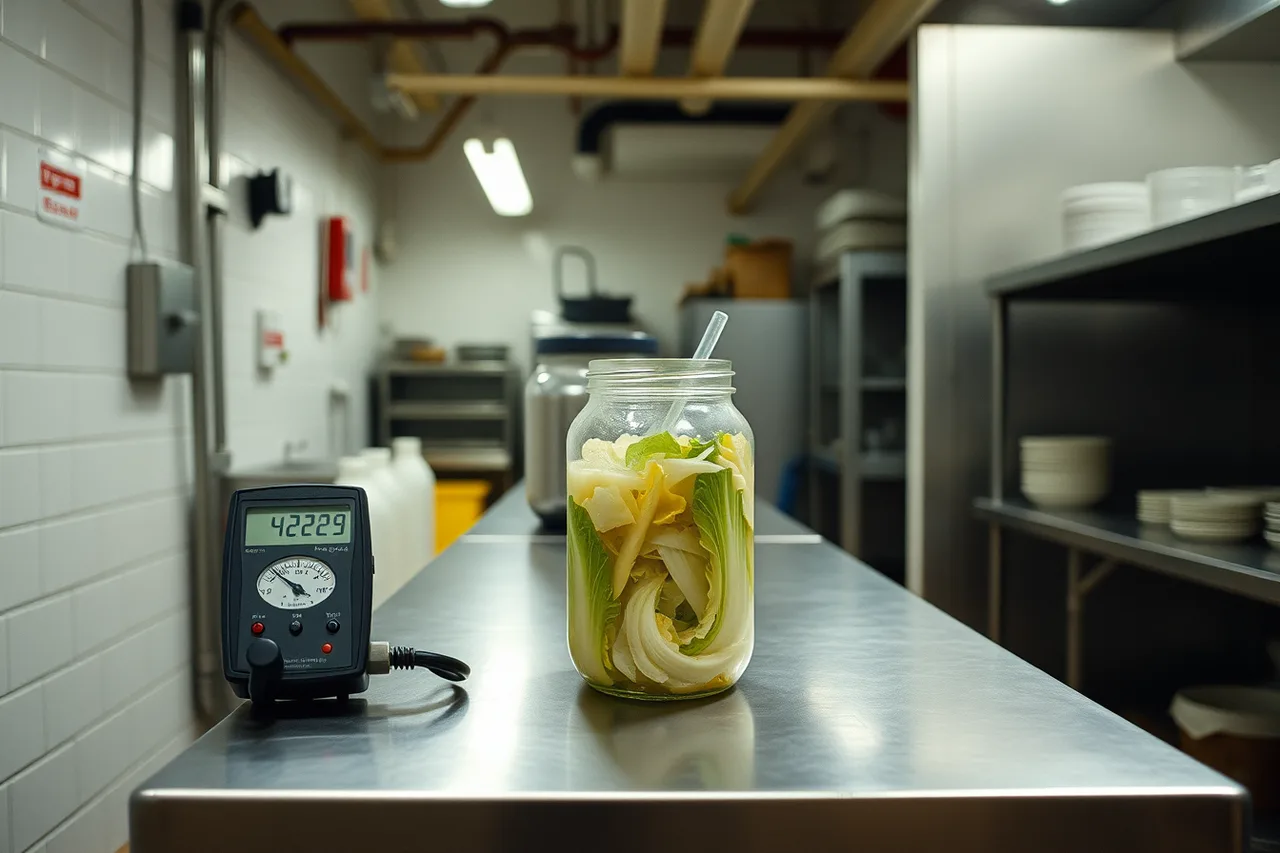
Equipment choices follow the process. The buyers and shops that stock fermentation supplies ask about the same equipment an inspector will check, so the list in how shops and bars choose fermentation supplies is a useful reference before you buy.
Labelling a fermented jar
Federal rules set the label. The CFIA administers federal food labelling requirements under the Food and Drugs Act and Food and Drug Regulations. A provincial permit does not replace them.
Fermented jar label checklist
- Common name
- Net quantity in metric units
- Ingredients in descending order
- Priority allergens including sulphites
- Durable life date if 90 days or less
- Responsible company name and place
Labels typically need the common name, the net quantity, the ingredient list, allergens, a durable life date and the business name and address. Nutrition labelling and bilingual English and French text can also apply, so check the current CFIA guidance for your product before you print.
Do not put health claims on a jar. Claims about digestion, immunity or gut health can move a product into a different regulatory category. Keep the label to what the food is and what it contains.
A second check on the artwork is cheap, because a missing allergen statement is an error that is easy to miss.
Records that protect the permit
Records show that the plan was followed. Keep a daily log of pH readings, cooler temperatures and cleaning, and keep supplier receipts with batch dates. Those records also help you trace which jars a batch went into if a question comes up later.
Daily and monthly records
- Daily pH logs
- Batch numbers
- Cooler temperatures
- Cleaning records
- Supplier invoices
- Monthly sales reconciliation
Ask each authority how long it expects records to be kept. The retention period is set by the authority and the regulation, so the answer belongs in writing from the authority rather than in this article.
For the storage side of batches, see small batch fermenting storage. For how a small batch moves from planning to a finished jar, see how small batch fermenting works.