Guides
Fermented carrot sticks that stay crunchy: a ratio guide
Fermented carrot sticks stay crunchy when salt lands at 2 to 2.5 percent of carrots plus water. A tested ratio guide, cut advice, and the fix when they go soft.
What to take away
- Salt at 2 to 2.5 percent of the combined weight of carrots and water keeps sticks snappy.
- Cut sticks one centimeter thick or thicker. Thin coins soften first.
- Hold the jar at 65 to 70 F and start tasting on day five.
- A clean snap when you bend a stick is the most reliable doneness test.
- Carrots that go soft never firm back up. Cook them instead of serving them raw.
What you need before starting
Salt percentage decides texture here, and it only works if you weigh things. A batch made with tablespoons drifts with the shape of the spoon and how you scoop it.
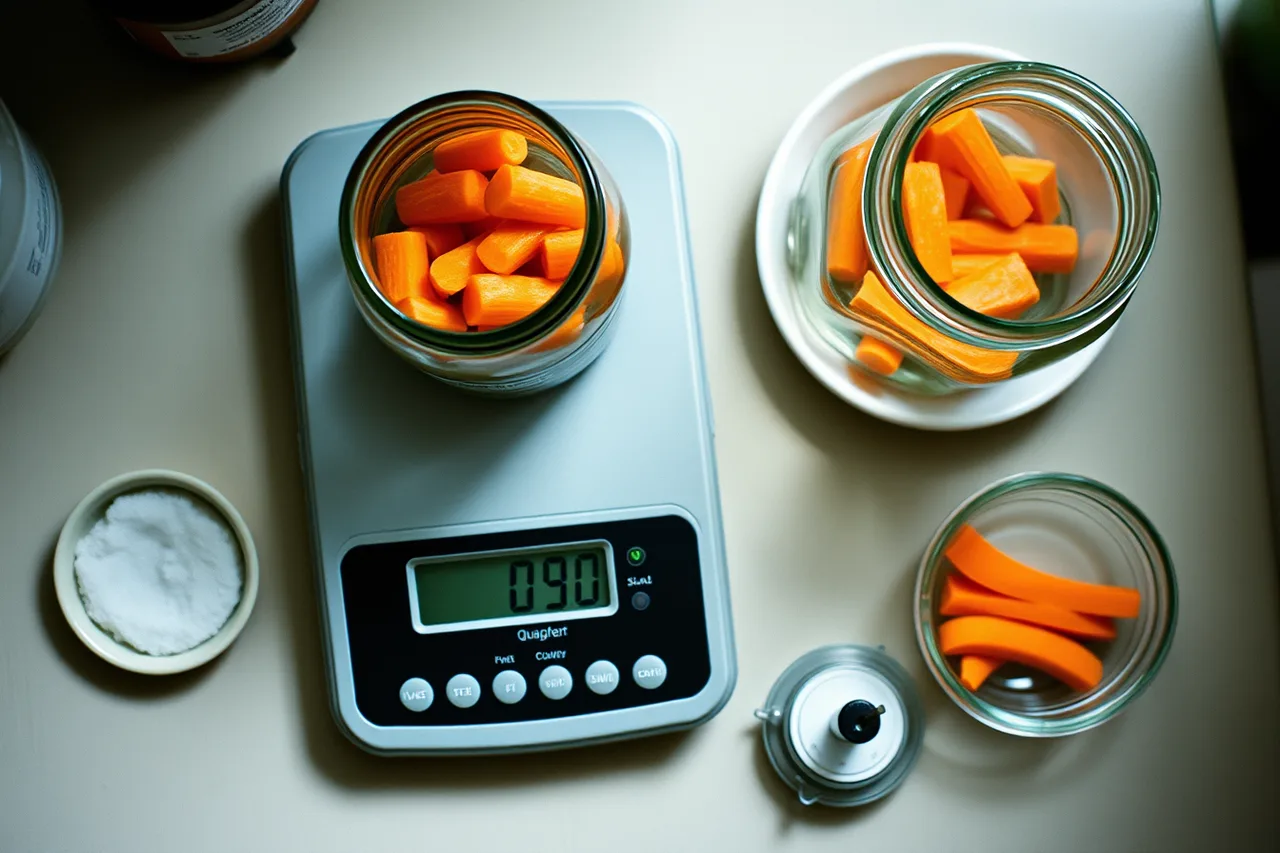
- A glass jar, one quart or half gallon
- Non-iodized canning or pickling salt
- A digital scale that reads in grams
- A glass weight, brine bag, or outer cabbage leaf to hold sticks down
- A sharp knife and a board
Cell walls and water content decide how a stick behaves in brine, and both are covered in the background on pectin and water content in the root. Those structures give way faster in a carrot that has spent months in cold storage than in one pulled last week.
Grocery carrots are cheap in the United States all year, so the useful skill is timing the rest of the shopping list. Buying produce for a single batch, in the right order, is worth reading before you commit a shelf to a jar.
The sequence
Salt goes into the water, not onto the carrots. Work in this order.
- Trim the carrots. Leave the skin if it is smooth; peel only rough or cracked roots.
- Cut sticks one to one and a half centimeters thick and eight to ten centimeters long.
- Weigh the sticks and write the number down.
- Add water to cover, weigh the water, then add the two figures together.
- Multiply the total by 0.02 to 0.025. That number is your salt weight in grams.
- Dissolve the salt in a cup of warm water, then top it up with cold.
- Pack the sticks upright, leaving about three centimeters of headspace.
- Pour the brine over them and hold them under the surface.
- Cap loosely or fit an airlock, and keep the jar at 65 to 70 F.
Bubbles appear within a day at 70 F and slow after day four. That curve tells you more than a calendar does, and Reading a home fermentation explains what the bubbles, the smell, and the taste are saying at each stage.
Where judgement replaces the recipe
Thickness and room temperature move the target. A jar at 62 F may need twelve days to reach the sourness that a jar at 72 F reaches in five.
Salt runs the other way. The National Center for Home Food Preservation advises roughly 3 tablespoons of salt per 5 pounds of shredded cabbage when fermenting vegetables, which lands near 2.5 percent by weight of the vegetable. Carrot sticks in brine sit in the same range.
Salt per quart jar
- 1.5 percent
- 15 g
- 2 percent
- 20 g
- 2.5 percent
- 25 g
- 3.5 percent
- 35 g
Result at 7 days, 68 F
- 1.5 percent
- Soft cores, mold risk
- 2 percent
- Snappy, mildly sour
- 2.5 percent
- Firm, classic half sour
- 3.5 percent
- Very firm, slow and salty
Figures assume a quart jar holding about 400 g of sticks and 600 g of brine.
Above 3 percent the sticks stay firm but taste salty before they taste sour. Below 1.5 percent the brine is a weak guard against mold, and texture goes first.
How to tell it is right
Bend a stick. It should break with a snap and a small spray of juice rather than fold in half.
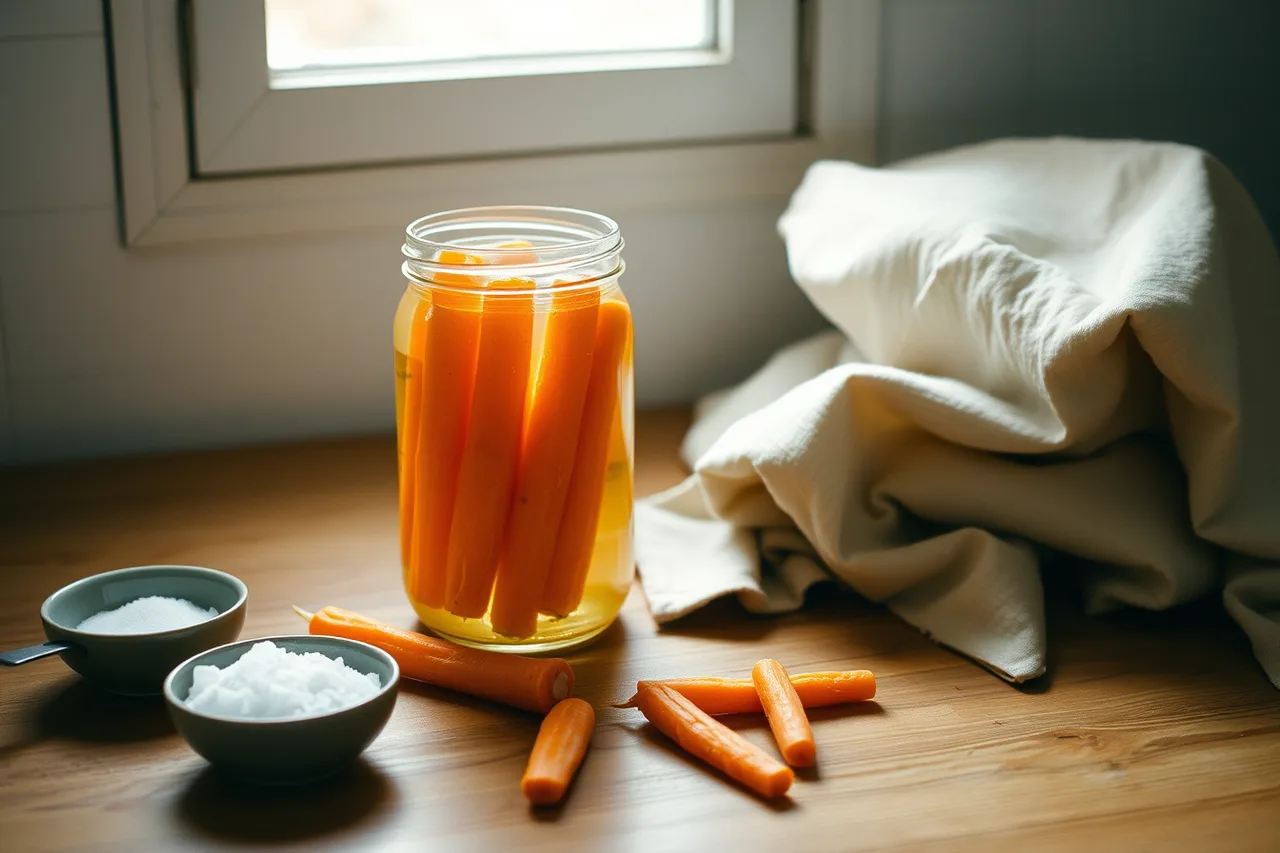
A jar that smells like clean sour cabbage and vinegar is on track. A jar that smells like nail polish remover or a swamp is not.
Taste one. Sour, a little sweet, salty at the edges, with carrot flavor still behind the acid. Once that balance lands, refrigerate the jar. Storing small batch ferments is the next thing to get right, because the last jar can taste very different from the first.
Fixing it when it is not
Soft carrots are the common failure, and the recovery has a name: the cold hold. Move the jar to the refrigerator within the hour. Cold slows the enzymes that break down pectin, though it cannot undo damage already done. Those carrots go into soup, hash, or a vinegar quick pickle.
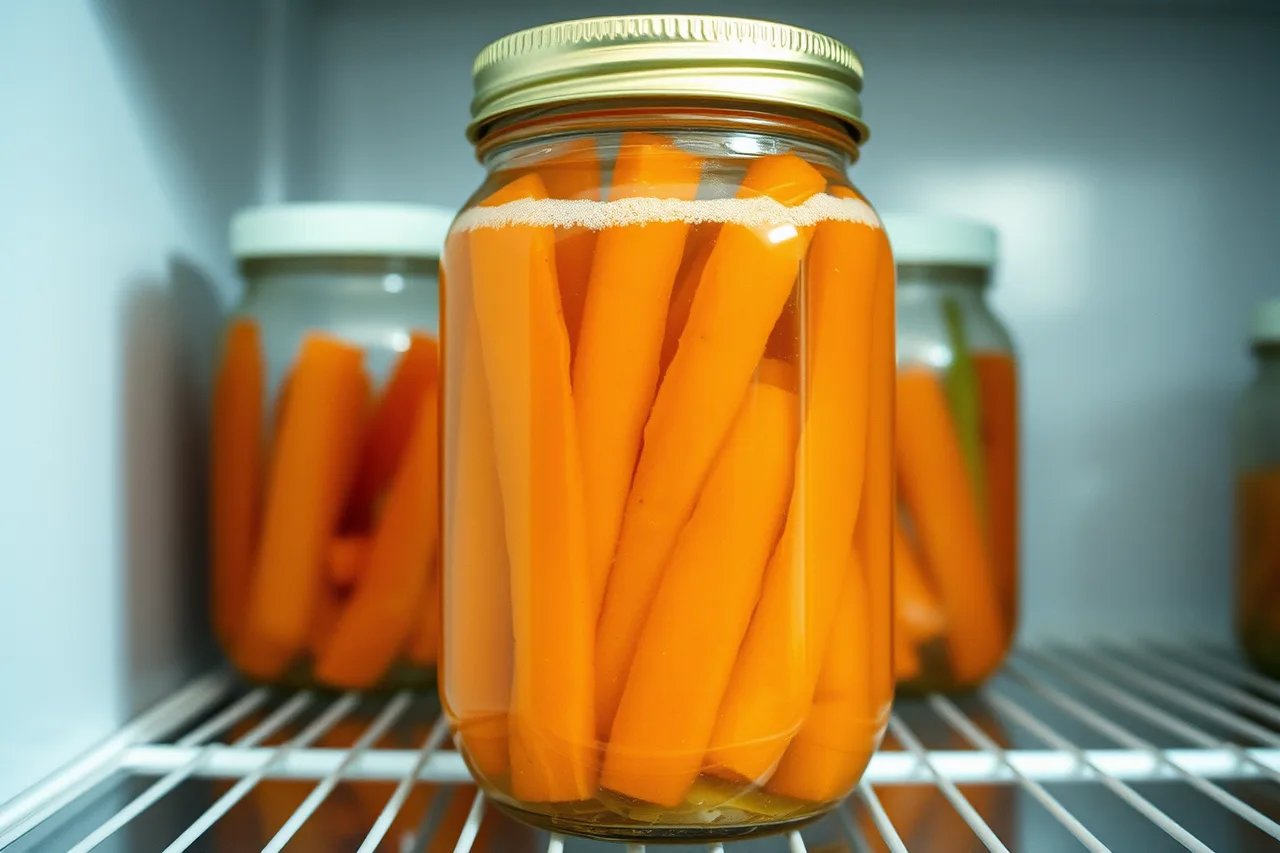
A white film on the surface is usually kahm yeast, safe but bitter. Skim it, push the carrots back under the brine, and refrigerate. Fuzzy or colored growth means the jar is finished. Fermentation mistakes sorts the harmless films from the ones that end a batch.



![500px provided description: Canning [#jar ,#tomatoes ,#canning]. Tomato Canning Jar Labels: What to Record and Why](/covers/what-labels-can-tell-you-about-home-ferment-case-studies-640.webp?v=73619010)