Guides
Fermented pickles vs vinegar pickles: what actually differs
Fermented pickles vs vinegar pickles: where the acid comes from, why a cloudy brine is normal, and which style suits your kitchen and your week.
What to take away
- Fermented pickles get their sourness from lactic acid bacteria already on the cucumber. Vinegar pickles get it from acid poured in from a bottle.
- A cloudy brine is normal in fermented pickles and rare in vinegar pickles.
- Vinegar pickles are faster and more predictable. Fermented pickles taste deeper but need salt, time and a steady cool room.
- USDA canning guidance keeps separate procedures for fermented dill pickles and for quick vinegar pickling.
- Neither style rescues a soft cucumber. Texture is set before the brine goes in.
Two processes that share one name
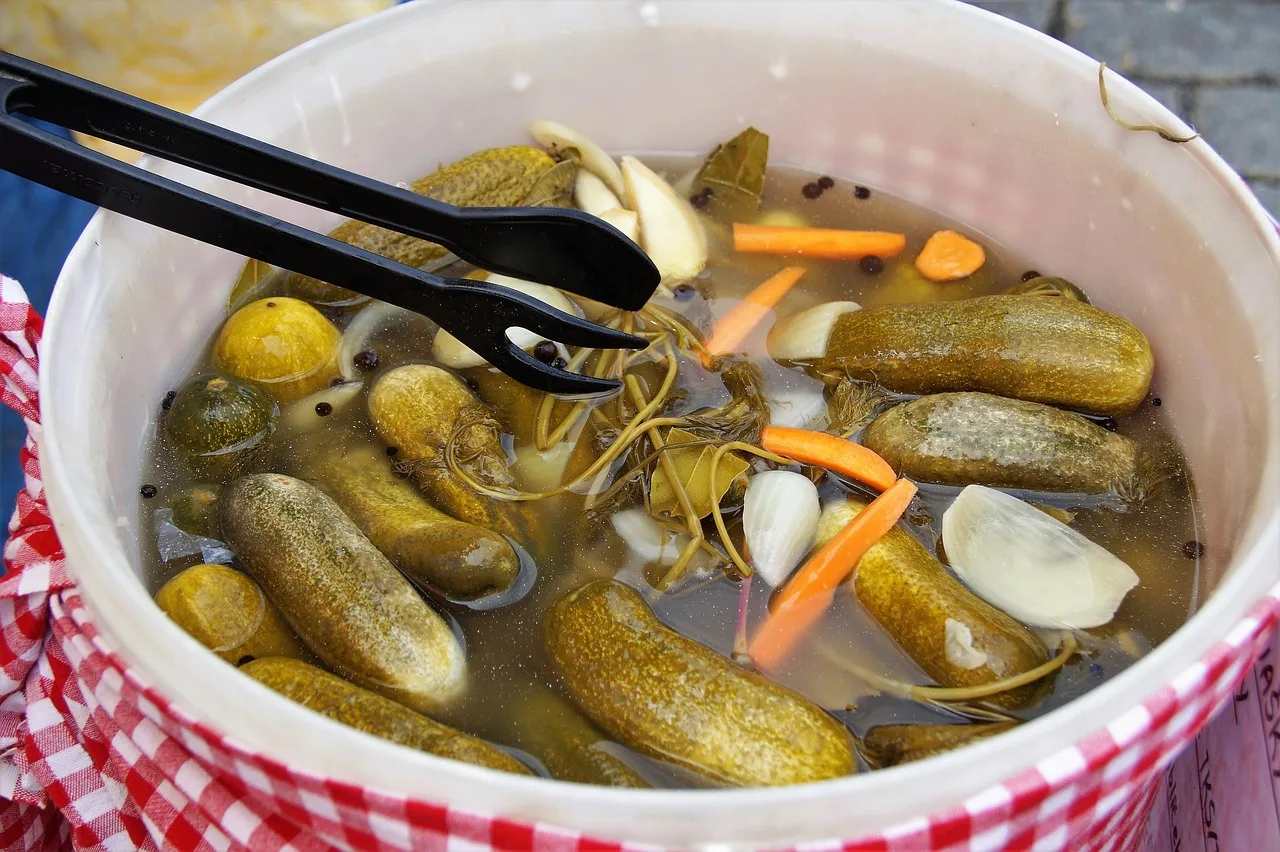
In fermented pickles, the acid forms in the jar. Cucumbers carry lactic acid bacteria on their skins, and a salt brine lets those bacteria outgrow molds and spoilage organisms. The brine turns sour in about one to three weeks at room temperature.
Where the acid comes from
Fermented pickles
- Acid source
- Bacteria in jar
- Time
- 1-3 weeks
- Brine
- Cloudy
- Main risk
- Soft, film, stall
Vinegar pickles
- Acid source
- Bottle
- Time
- 1-2 days
- Brine
- Clear
- Main risk
- Flat or harsh
Vinegar pickles skip that step. The acid comes from a bottle, and the jar is ready in a day or two.
The two products fail in different ways. A fermented batch can go soft, grow a surface film, or stall before the pH drops enough. A vinegar batch can taste flat or harsh, though a sealed jar rarely spoils.
The encyclopedia entry on pickled cucumbers splits brined cucumbers from vinegar-cured ones for the same reason. Labels blur the two. The ingredient list is the only reliable clue on the shelf.
The criteria that matter
Fermented cucumber pickles
- Acid source
- Lactic acid bacteria on the fruit
- Time to a finished jar
- 1 to 3 weeks at room temperature
- Salt
- 5 to 8 percent brine by weight of water
- Temperature sensitivity
- High; warm rooms soften the fruit
- Brine appearance
- Cloudy, with sediment
- Texture
- Follows cucumber freshness and bloom
- Shelf stability
- Refrigeration, or a tested canning process
Vinegar pickles
- Acid source
- Distilled vinegar, around 5 percent acetic acid
- Time to a finished jar
- 1 to 2 days in the refrigerator
- Salt
- Only what the recipe calls for
- Temperature sensitivity
- Low; the brine is already acidic
- Brine appearance
- Clear
- Texture
- More forgiving, especially with a calcium salt
- Shelf stability
- Reliable after a water-bath process
Salt, temperature and cucumber freshness decide the fermented jar. The vinegar jar answers to different variables. When a batch goes soft, the cause is usually one of them rather than the recipe, and what goes wrong and why sorts through the likely suspects.
Fermented cucumber pickles, step by step
- Pick cucumbers within a day of harvest and cut off the blossom end, which carries enzymes that soften the fruit.
- Dissolve salt in non-chlorinated water. The USDA procedure for fermented dill pickles uses a brine in the 5 to 8 percent range by weight, plus dill and garlic.
- Submerge the cucumbers under a weight and leave headspace for expansion.
- Hold the jar at roughly 65 to 72 F and start tasting after the first week.
- Move the jar to the refrigerator when the sourness suits you.
Judging the stopping point is a sensory call, and reading a home fermentation by its bubbles, smell and surface separates a good jar from a sharp one.
Fermented cucumber pickle steps
- Pick cucumbers within a day, cut blossom end
- Dissolve salt in non-chlorinated water
- Submerge under a weight, leave headspace
- Hold at 65-72 F, taste after week one
- Refrigerate when sourness suits you
A cloudy brine is not a spoiled brine. The haze is dead lactic acid bacteria and fine vegetable matter.
A surface film is a different question. A thin white layer is usually kahm yeast, a normal growth on fermented vegetables and generally harmless next to fuzzy mold.
Vinegar pickle vs lacto fermentation: where each one wins
Vinegar pickling is right when you need a dependable result in a day, when you are filling pantry shelves, or when the cucumbers are less than perfect. Lacto fermentation is right when you want the flavor vinegar cannot imitate: a half-sour snap and a brine that keeps changing for a week. Both are correct answers to different questions.
Temperature is the lever you still control after the jar is sealed. Cold storage slows that drift without stopping it. Storing small batch ferments so the last jar tastes as good as the first comes down to a few habits.
What neither style solves
Neither process makes a soft cucumber crisp again, and neither one makes a jar safe by taste alone. Cucumber variety, harvest timing and the blossom end matter more than any brine additive. The FDA puts safe cold holding at 40 F or below.
Example: one quart of cucumbers, split in two
Take a quart of fresh cucumbers in July and split it. Half go into a 5 percent brine with dill and a weight, then sit on the counter for ten days.
Half go into a vinegar brine with the same dill and head straight for the refrigerator. On day ten the fermented jar is cloudy and lively, while the vinegar jar tastes as it did on day one. Run that test yourself, and comparing small batch fermentation shows how to keep the tasting fair.



![500px provided description: Canning [#jar ,#tomatoes ,#canning]. Tomato Canning Jar Labels: What to Record and Why](/covers/what-labels-can-tell-you-about-home-ferment-case-studies-640.webp?v=73619010)