Reviews
Part of 4 fermentation tools compared on daily use, not shelf appeal
How to clean and store fermentation tools properly between batches
Cleaning and storing fermentation tools between batches: airlocks, bungs, weights, crocks and gauges. Equipment left dirty or damp is a common reason a good recipe produces a bad jar.
What to take away
- Washing removes residue. Sanitizing reduces microbes on surfaces that touch the ferment. The two are separate steps, and a tool can be clean but still unsanitized.
- Take every removable part apart between batches, including airlocks, bungs, grommets, spigots and valve lids.
- Use a food-safe sanitizer and follow its label for dilution and contact time. Rinse only as the label directs.
- Dry every part fully before you store it, because trapped moisture is what leaves smells and mould behind.
- Calibrate pH meters and check hydrometers and thermometers on their own schedule, not between batches.
The tools that need cleaning between batches
Most fermenting kits share a short list of parts that touch the food or the brine. Each needs its own care.
- Airlocks, including three-piece and S-type designs.Take them apart, clear the water chamber and check the valve for residue.
- Rubber bungs and grommets.Remove them from the lid and check for cracks or sticky residue.
- Spigots and valves.Flush them out, since brine can crystallise inside a spigot.
- Weights and followers.Remove the old brine, wash them and dry them fully.
- Crocks and lids.Empty, wash the inside and the lid, and leave the lid off to dry.
- pH meters, hydrometers, refractometers and thermometers.Rinse, dry and store them as the manufacturer directs. Calibrate pH meters on the manufacturer's schedule, not after every batch.
The cleaning sequence
Work through the same steps for each batch, so nothing is skipped.
- Disassemble. Remove airlocks, bungs, weights, followers and any removable valve.
- Rinse away the brine and food residue with cool water first, so the wash does not set protein or starch onto the surface.
- Wash with hot water and a mild, unscented soap or a cleaner made for food equipment. Brush the crevices of airlocks, bungs and spigots.
- Rinse thoroughly to remove the soap, because unrinsed soap is a source of off flavours.
- Sanitize with a food-safe sanitizer, such as an acid sanitizer or an iodophor, mixed and used as the label directs. Follow the stated contact time, and do not rinse afterwards unless the label says to.
- Air dry every part on a clean rack, with the airlock chamber open, until nothing is damp.
Do not use scented products or ordinary household cleaners on parts that touch the food. A film of perfume or cleaning agent can transfer to the next batch.
Storing between batches
Store each part once it is fully dry. Keep airlocks and bungs in a closed container so dust does not settle inside them. Store weights and followers on a clean shelf, not stacked on wet parts.
- Airlocks and bungs.Dry, in a closed bag or box, with the airlock chamber empty.
- Weights and followers.Dry, on a clean shelf, away from the food they press.
- Crocks.Dry and open to the air, lid stored separately, so nothing sours inside.
- Spigots and valves.Dry, disassembled if the manufacturer advises it.
- Thermometers, scales and pH meters.Stored where they will not be dropped, with the probe protected.
Check each item for cracks, softening or discolouration every time you use it, and replace any part that will not dry or clean properly.
Smell and taste in a stored crock
A crock put away damp will tell you when you open it, usually as a sour or musty smell. Do not try to cover it with more brine or seasoning. Wash it again, sanitize it, and dry it fully before the next batch.
For the upkeep each tool needs, compare the tools on day-to-day use in fermentation tools compared on price, use and upkeep. For what causes off flavours in a finished jar, see 5 parts of fermentation off flavours, explained.
Canning jars in the same kitchen
If you also can, the jars need a separate routine. Sterilizing empty jars for canning is a different job from cleaning fermentation tools, and it follows the canning process rather than the fermenting one.
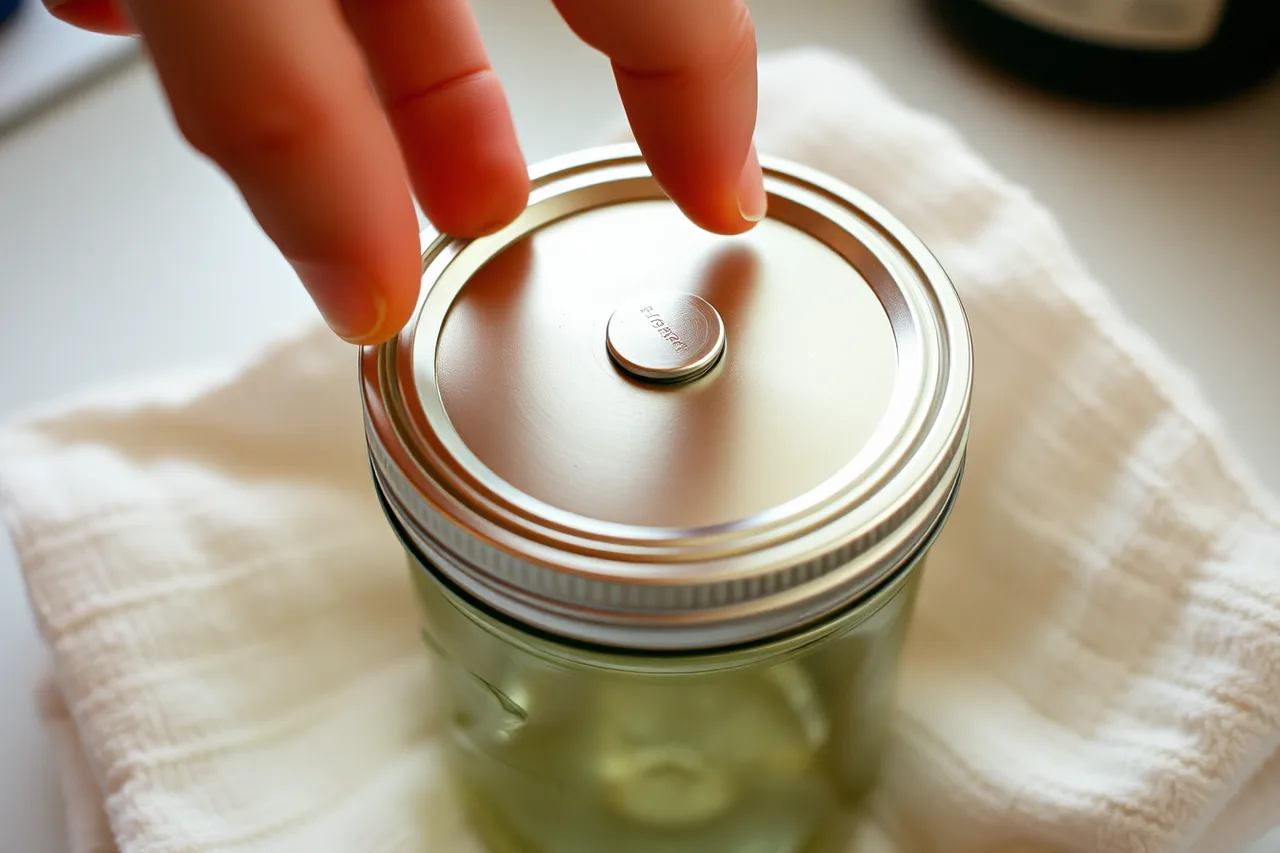
After processing, do not retighten hot lids, because that can damage the sealing compound. Let jars cool undisturbed, and test the seals once they have cooled. Remove the bands before storing sealed jars, so a failed seal is visible rather than held closed. For how small batches are stored, see small batch fermenting storage.
Stocking the gear
A shop that sells fermentation gear should know the cleaning and storage needs of each item before it stocks it. For what to check first, see fermentation jars retail: stocking canning and ferment gear.