Reviews
Part of 4 fermentation tools compared on daily use, not shelf appeal
5 things worth knowing about fermentation tools tasting
Some equipment choices reach the plate and most do not. A test design for finding out which is which, and the three that reliably change what you taste.
What to take away
- Three equipment choices reliably reach the platethe salt you use, the metal your utensils are made of, and how evenly you cut.
- Table salt with anti-caking material can cloud the brine. Flake salt varies in density and is not recommended.
- Reduced-sodium salt may be used in some quick pickle recipes and never in fermented ones.
- Copper, iron, galvanized metal, and lead-glazed crocks are excluded from fermenting entirely, so they are not a taste question.
The five things worth knowing, in order:
- Salt type. The National Center for Home Food Preservation recommends canning or pickling salt. Iodized or non-iodized table salt is safe in fermented and non-fermented pickles, but anti-caking material can cloud the brine. Flake salt varies in density and is not recommended.
- Vessel capacity. A 1 gallon container holds 5 pounds of fresh cucumbers, and a 5 gallon container holds 25 pounds, per Penn State Extension.
- Vessel material. Glass and stainless steel are excellent substitutes for stone crocks. Copper, iron, galvanized metal, and lead-glazed crocks are excluded. Other 1 to 3 gallon food-grade containers may be used if lined with a clean food-grade plastic bag.
- Cut thickness. Shred thickness changes texture and the pace of the ferment, which makes it a substitution worth testing.
- Texture aids. An ice water soak of 4 to 5 hours is a safer route to crispness than lime or alum. Calcium chloride may be used in quick process pickles following the manufacturer's instructions, with 1/16 inch cut off the blossom end.
Design the test around one substitution
Make one batch, split it, change one piece of equipment, and taste blind at the same day count. That is the whole method. The interesting part is choosing a substitution that could plausibly matter.
One-Substitution Test Method
- Make one batch of pickles
- Split into two identical jars
- Change one piece of equipment
- Taste blind at same day count
Salt type is the best first test in a quick pickle, where the salt is not carrying the safety load and a recipe permits some variation. In a fermented recipe salt is fixed, so test the cutting tool or the vessel instead.
Salt is the substitution you can actually taste
The National Center for Home Food Preservation's note on salts used in pickling sets the experiment's boundaries and recommends canning or pickling salt.
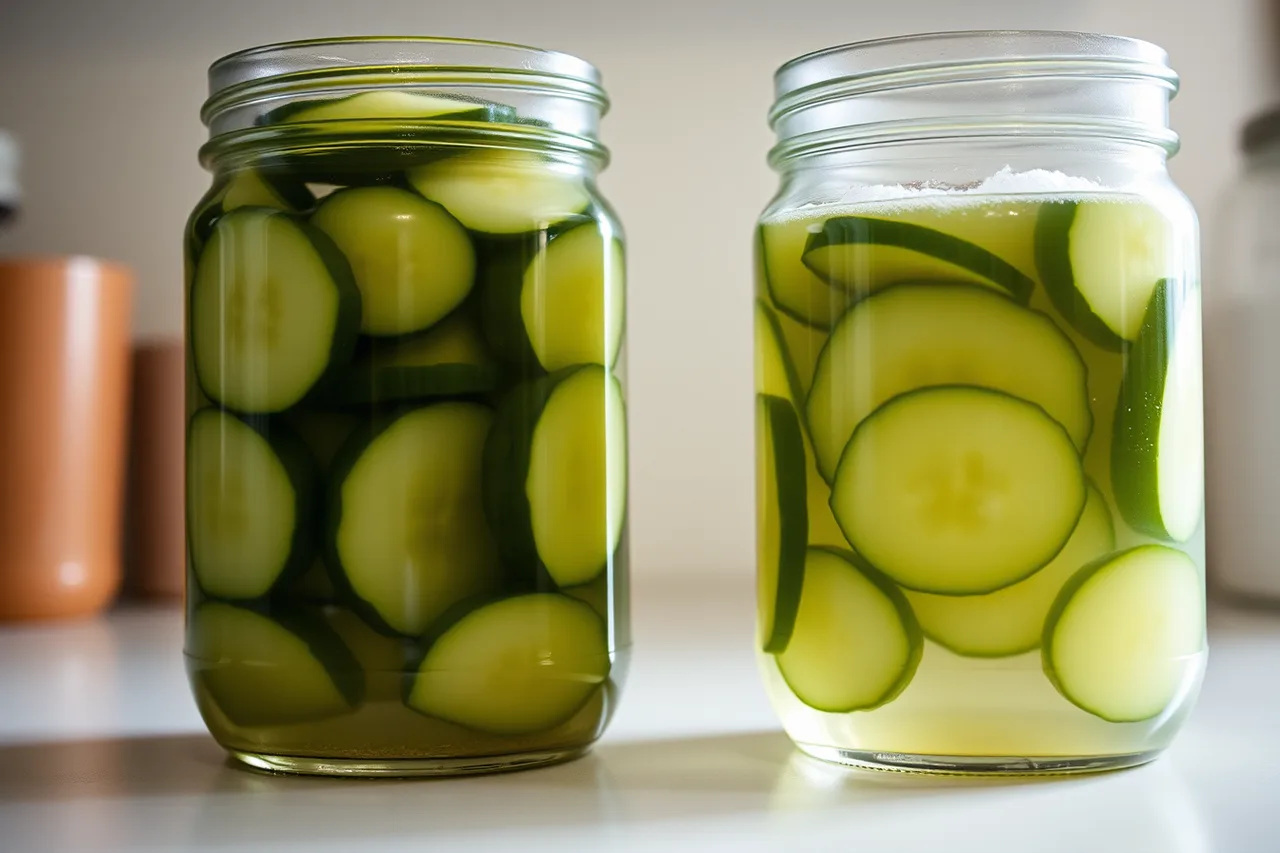
Fermented and non-fermented pickles may be safely made with either iodized or non-iodized table salt, but non-caking materials added to table salts may cloud the brine. Flake salt varies in density and is not recommended.
It also draws the line you must not cross in a comparison. Reduced-sodium salts such as lite salt may be used in quick pickle recipes as the guide indicates, and the pickles may taste slightly different than expected. Use of reduced-sodium salt in fermented pickle recipes is not recommended.
So the honest experiment is: two quick pickle jars, one with canning salt, one with table salt, everything else identical. You will see the cloudiness difference before you taste anything.
Utensils, texture, and the things you cannot fix later
Penn State Extension's quick process pickles guide gives equipment rules that shape a batch before flavor. A 1 gallon container holds 5 pounds of fresh cucumbers; a 5 gallon container holds 25 pounds.
For a home cook, that same container math decides how many jars a first batch fills, where home fermentation starts.
Do not use copper, iron, galvanized metal containers, or lead-glazed crocks, and if you are unsure about a container's safety, use an alternative. Glass and stainless steel are excellent substitutes for stone crocks, and other 1 to 3 gallon food-grade containers may be used if lined with a clean food-grade plastic bag, never a garbage bag or trash liner.
With good ingredients and current methods, lime and alum are not needed for crisp pickles. Soaking cucumbers in ice water for 4 to 5 hours before pickling is a safer route to crispness.
Commercially available calcium chloride products may be used in quick process pickles following the manufacturer's instructions; cut 1/16 inch off the blossom end.
What to test, and what not to bother with
| Substitution | Worth testing? |
|---|---|
| Canning salt against table salt in a quick pickle | Yes, visible and tasteable |
| Shred thickness | Yes, changes texture and pace |
| Vessel style | Yes, changes surface and skimming |
| Reduced-sodium salt in a ferment | No, not recommended at all |
| Reactive metal utensils | No, they are excluded on safety |
| Brand of identical-spec equipment | No, you are testing packaging |
Report what you actually found
Write the substitution, the day count, and one sentence per sample. Our tools comparison covers what each tool is meant to do, and the method for comparing small batches covers holding the rest of the variables still.