Guides
Home fermentation, from a jar of kraut to the canning safety line
What happens in a jar of kraut, what salt weight and room temperature control, and the exact point where fermenting stops and canning safety rules take over.
What to take away
- Salt weight, room temperature, and keeping the vegetables under the brine are what you control. Almost every failure traces back to one of them.
- Fermenting is not canning. Acid built by bacteria protects the jar while it ferments; it does not make a low-acid vegetable safe to can by boiling water.
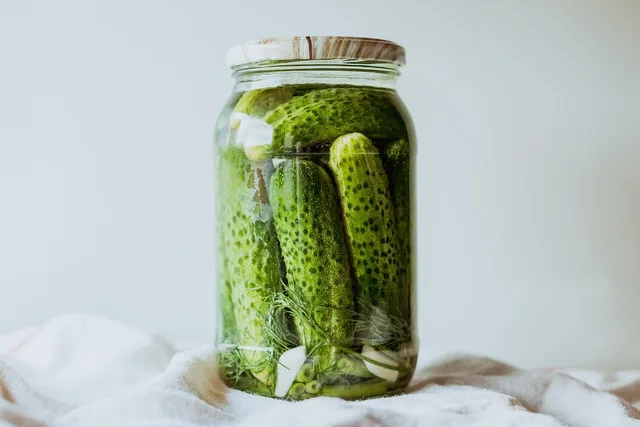
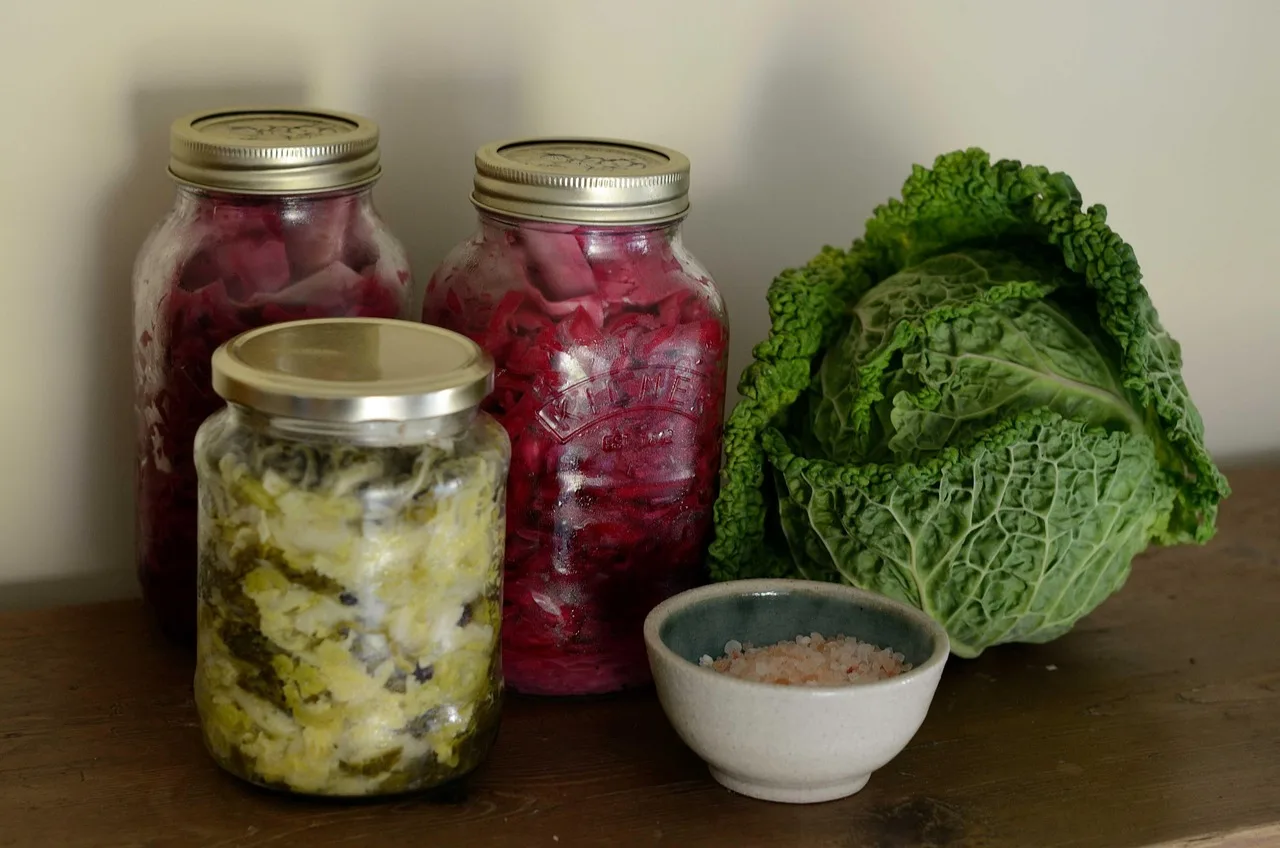
- USDA publishes tested home directions for two vegetable ferments: sauerkraut and fermented dill pickles. Learn on those before improvising.
- If a batch turns slimy, softens, or smells rotten, throw it out. Do not taste it to decide.
What is happening in the jar
Fermentation runs in stages, with organisms handing off to each other. Virginia Cooperative Extension's guide to vegetable fermentation describes three.
Salt percentages by vegetable
- 1-15%Salt range in vegetable ferments
- 2.25-2.5%Ideal for sauerkraut
Three stages of fermentation
- InitiationLeuconostoc mesenteroides leads
- PrimaryAcid and CO2 build fast
- SecondaryLactobacillus plantarum finishes
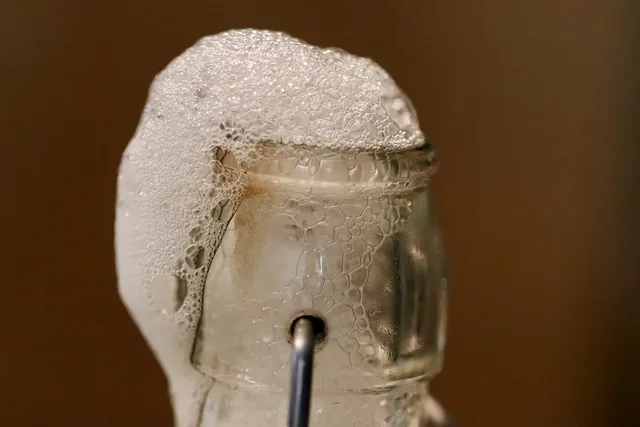
The acid keeps the food edible. Carbon dioxide holds oxygen out, which is why an active jar bubbles.
That guide also puts numbers on the ranges: salt in vegetable fermentations runs from 1 to 15 percent depending on the vegetable, with sauerkraut ideally at 2.25 to 2.5 percent. Those are not interchangeable. Weigh the salt.
The four jobs salt is doing
- It pulls water and sugar out of the vegetable, which is where a dry-salted kraut gets its brine.
- It gives fermenting bacteria an advantage over spoilage organisms, yeasts, and molds.
- It firms plant pectin and slows pectinase, the enzyme that turns pickles to mush.
- It slows the ferment, lengthening the window in which good flavor develops.
Use canning or pickling salt. Anti-caking agents cloud a brine, iodine can brown vegetables and slow the ferment, and natural salts vary in density enough to change the concentration you thought you had.
Temperature decides the timetable
| Temperature while fermenting | What USDA directions expect for sauerkraut |
|---|---|
| Below 60 F | Kraut may not ferment at all |
| 60 to 65 F | Full fermentation in about 5 to 6 weeks |
| 70 to 75 F | Full fermentation in about 3 to 4 weeks |
| Above 75 F | Kraut may go soft |
The USDA sauerkraut directions work 5 pounds of cabbage at a time with 3 tablespoons of salt, topping up with boiled and cooled brine at 1-1/2 tablespoons per quart of water if the cabbage juice does not cover. Plan a 1 gallon container per 5 pounds of vegetables, and keep them 1 to 2 inches under the brine.
Where fermenting stops and canning begins
This is the part people skip. The National Center for Home Food Preservation's general information on fermenting states that acidity matters as much to safety as to flavor. Do not alter the vinegar, food, or water proportions in a recipe. A minimum uniform level of acid throughout the product is what prevents Clostridium botulinum from growing.
Acidity, not preference, decides the canner. Fully fermented kraut and dill pickles have tested boiling water processes. A low-acid vegetable that has not been fermented or acidified by a tested recipe must be pressure canned.
Start with the two tested ferments
Make sauerkraut and fermented dill pickles once each, as written. You will learn what a healthy ferment smells like and how long your kitchen actually takes.
Our guide to reading a ferment as it goes covers the checkpoints, and the notes on labeling and dating jars cover what to write down.
Common questions
Do I need an airlock lid?
Can I cut the salt to make it healthier?
My jar stopped bubbling after a week. Is it done?
Is a film on the surface the same as mold?
In this guide
- Reading a home fermentation by its bubbles, smell, and the moment to stopHome fermentation tasting: the sensory checkpoints that tell you a vegetable ferment is working, plus the signs that mean stop and start again.
- Home fermentation businesses: acidified-food rulesHome fermentation businesses face different rules depending on whether acidity comes from fermentation or added acid, and whether products stay refrigerated.
- 4 takeaways on home fermentation pairingsHome fermentation pairing ideas: heat, salt, and acid decide whether a spoonful of kraut lifts a plate or flattens it. How to serve a live ferment.
- What to write on the jar, and what a label cannot tell you: what actually mattersA home ferment label is a record, not a claim. What to write on it, how long the contents actually keep, and the limits of any label as evidence of safety.
- Fermentation kits and boxes: what to check before you subscribe, updated for 2027No brand ranking here, and here is why. A checklist for judging a fermentation starter kit or subscription box against what the tested directions require.