Reviews
Fermentation Jars Comparison: 5 Vessel Differences
This fermentation jars comparison covers five practical vessel differences: capacity, material, seal design, submersion, and headroom for vegetable ferments.
What to take away
This fermentation jars comparison comes down to five practical factors:
- Capacity.Plan a 1 gallon container for every 5 pounds of vegetables, which makes a 5 gallon crock the right size for 25 pounds.
- Material.No aluminum, copper, brass, galvanized metal, or iron for fermenting. Food-grade plastic and glass containers are substitutes for stone crocks.
- Seal design.Open crocks are open on top; water seal crocks keep air out while letting carbon dioxide escape.
- Keeping vegetables submerged.The vessel needs to hold vegetables under the brine. Small jars work, but keeping vegetables submerged in them is harder, so more batches are lost.
- Headroom.Leave 4 to 5 inches above the vegetables in a crock; a half-empty vessel behaves worse than a full one.
The vessel has one job
Everything else about a fermenting vessel is convenience. The job is to keep the vegetables 1 to 2 inches under the brine while the carbon dioxide the bacteria make can get out. Any container that does that in a food-safe material will work; any container that fails at it will lose batches no matter what it cost.
Open crock or water seal
Oregon State University Extension's note on the fermentation crock describes two designs. The open crock is the traditional style, completely open on top, and commonly found secondhand.
A water seal crock has a shallow gutter around the rim that is filled with water. A lid sits down into the gutter, sealing against outside air while letting carbon dioxide escape during fermentation.
That is the practical difference. An open crock needs skimming; a water seal crock needs the gutter kept filled and the lid left alone.
Materials, and what is disqualified
Montana State University Extension's guide to canning pickles and sauerkraut sets out the container rules. A 1 gallon container is needed for each 5 pounds of fresh cucumbers or cabbage, so a 5 gallon stone crock suits 25 pounds. Food-grade plastic and glass containers are excellent substitutes for stone crocks.
Other 1 to 3 gallon non food grade plastic containers may be used if lined inside with a clean food-grade plastic bag, and foods must contact only food-grade plastics, never garbage bags or trash liners. Do not use aluminum, copper, brass, galvanized, or iron containers for fermenting pickles or sauerkraut.
The same guide covers weighting. Put a dinner plate or glass pie plate inside the container, weighted with 2 to 3 sealed quart jars of water. Or use a large clean plastic bag filled with 3 quarts of water containing 4-1/2 tablespoons of salt. Cover the opening with a clean heavy bath towel.
The comparison, honestly
Strengths
- Water seal crock
- Air excluded continuously, little skimming
- Open stone crock
- Traditional, holds temperature well
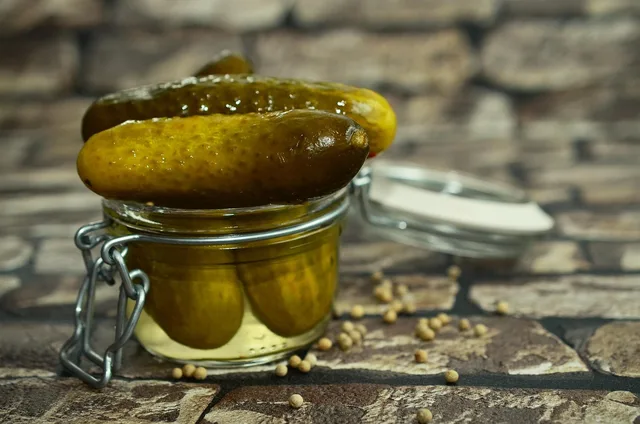
- Half-gallon glass jar
- Cheap, visible, easy to store
- Quart jar with airlock lid
- Small batches, low waste
- Food-grade plastic bucket
- Cheap at scale, light
Weaknesses
- Water seal crock
- Cost, weight, gutter must stay filled
- Open stone crock
- Needs skimming, glaze unknown if secondhand
- Half-gallon glass jar
- Harder to keep vegetables submerged
- Quart jar with airlock lid
- Small volume swings temperature faster
- Food-grade plastic bucket
- Scratches harbor residue, opaque
Secondhand crocks: one question first
Glaze. Crocks made before the 1970s may carry lead in the glaze, and lead leaches under acidic conditions. If the provenance is unknown, use it for dry storage rather than for a month-long acidic ferment.
Common questions
Is a wide-mouth jar better for fermenting?
Can I ferment in a food-grade bucket?
Do I need a lid at all?
Should the vessel be full?
In this guide
- Fermentation jars how to compare vessels in a blind tastingA practical “fermentation jars how to” test: split one cabbage batch among a water-seal crock, a weighted jar under cloth, and a valve-lid jar; taste blind.
- 5 details of no brand origin stories people missFive details from no-brand origin stories that home fermenters miss, from the 1858 Mason shoulder to the wire bail gasket that cannot be reused.
- Where spending more on a fermentation vessel buys convenience, not capabilityWhere extra money on a fermentation vessel buys convenience like less skimming, and the one purchase that changes what you may safely make: a pressure canner.
- Fermentation Jars Retail: Stocking Canning and Ferment GearFermentation jars retail shelf guidance for shops stocking canning jars, lids, canners, fermentation weights, and airlock hardware.
- Fermentation vessel trends: features that help submersion, and what no vessel changes about canningSmall weights, one way valve lids and small crocks help home ferments. Acidity, not equipment, decides canning, and tomatoes need added acid.