Reviews
Part of What fermentation supplies are for, and which ones you can skip: the parts worth your time
Four labels decide whether a fermentation batch actually works
Four labels decide whether a batch works. What to check on each one before you pay, and the claims on packaging that carry no weight at all.
What to take away
- Vinegarlook for 5 percent acidity, sometimes printed as 50 grain. Anything lower or unstated is not for pickling.
- Saltlook for canning or pickling salt. Additives and iodine are what you are avoiding, not a lack of provenance.
- Jarshalf-gallon canning jars have tested processes only for very acidic fruit juices.
- Lidsthe flat lid is single use for canning. Nothing on the box changes that.
The acidity figure is the whole label
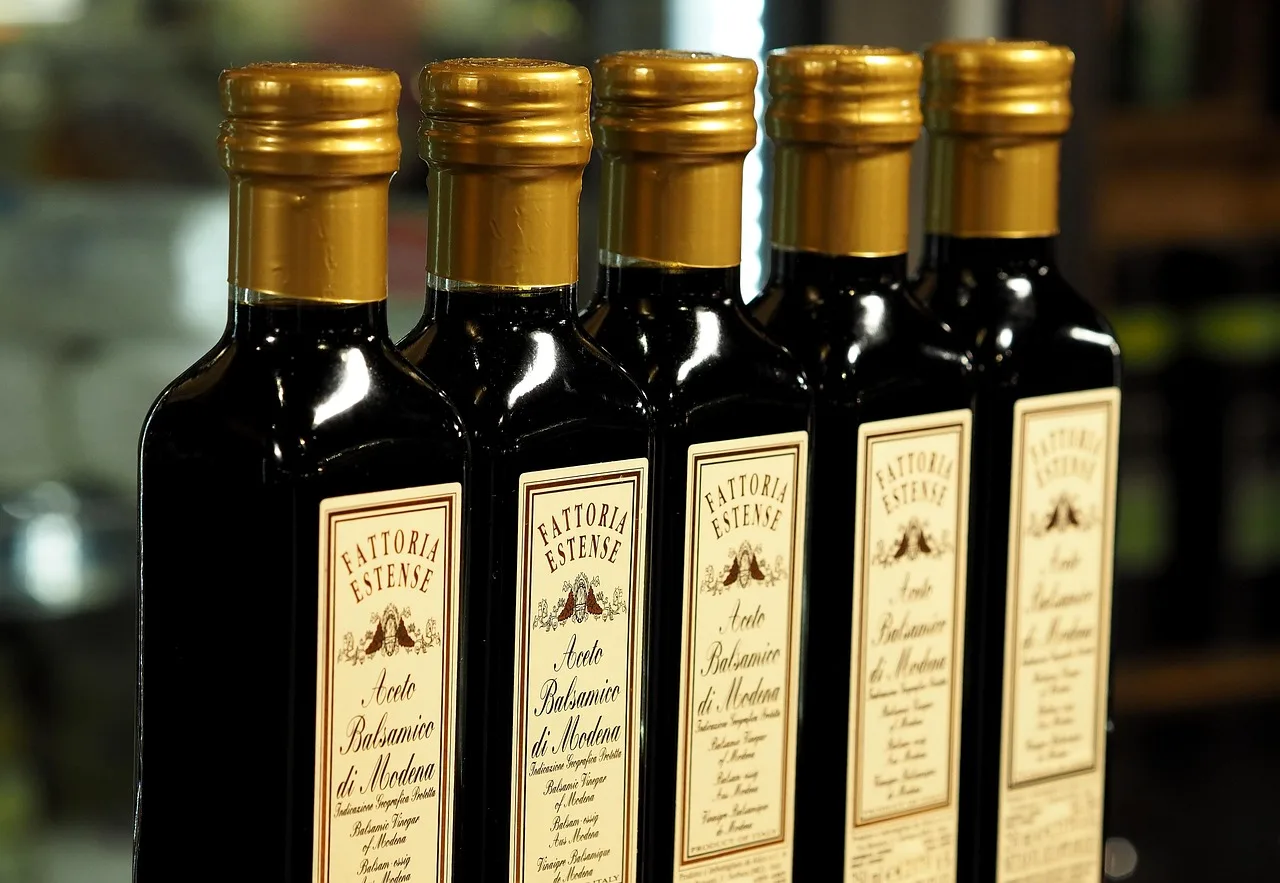
Vinegar is bought for one number. Below 5 percent acidity there is not enough acid to control microbial growth in a pickling recipe. Cider and white distilled are both usually 5 percent, but not always, and specialty vinegars vary widely. The number is on the label; the marketing on the front is not the number.
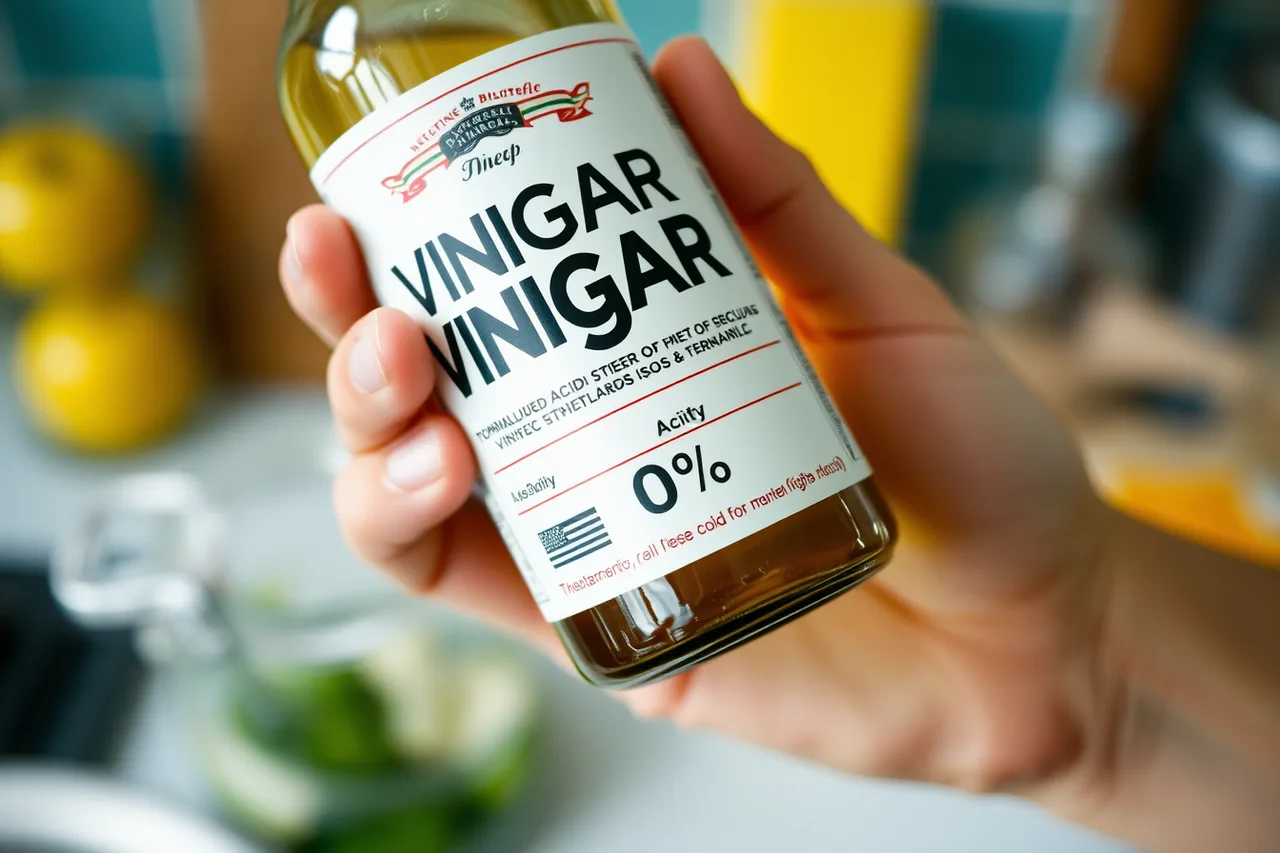
The same applies to products sold as pickling or canning vinegar, some of which include added flavorings. Check the acidity figure rather than the product name.
Salt labels: what you want is an absence
Canning or pickling salt is pure granulated salt without anti-caking agents or iodine. On a label that shows up as a very short ingredient list. Words like natural, artisan, or mineral-rich describe the opposite of what a brine wants. Those minerals discolor vegetables and change the weight per spoonful.
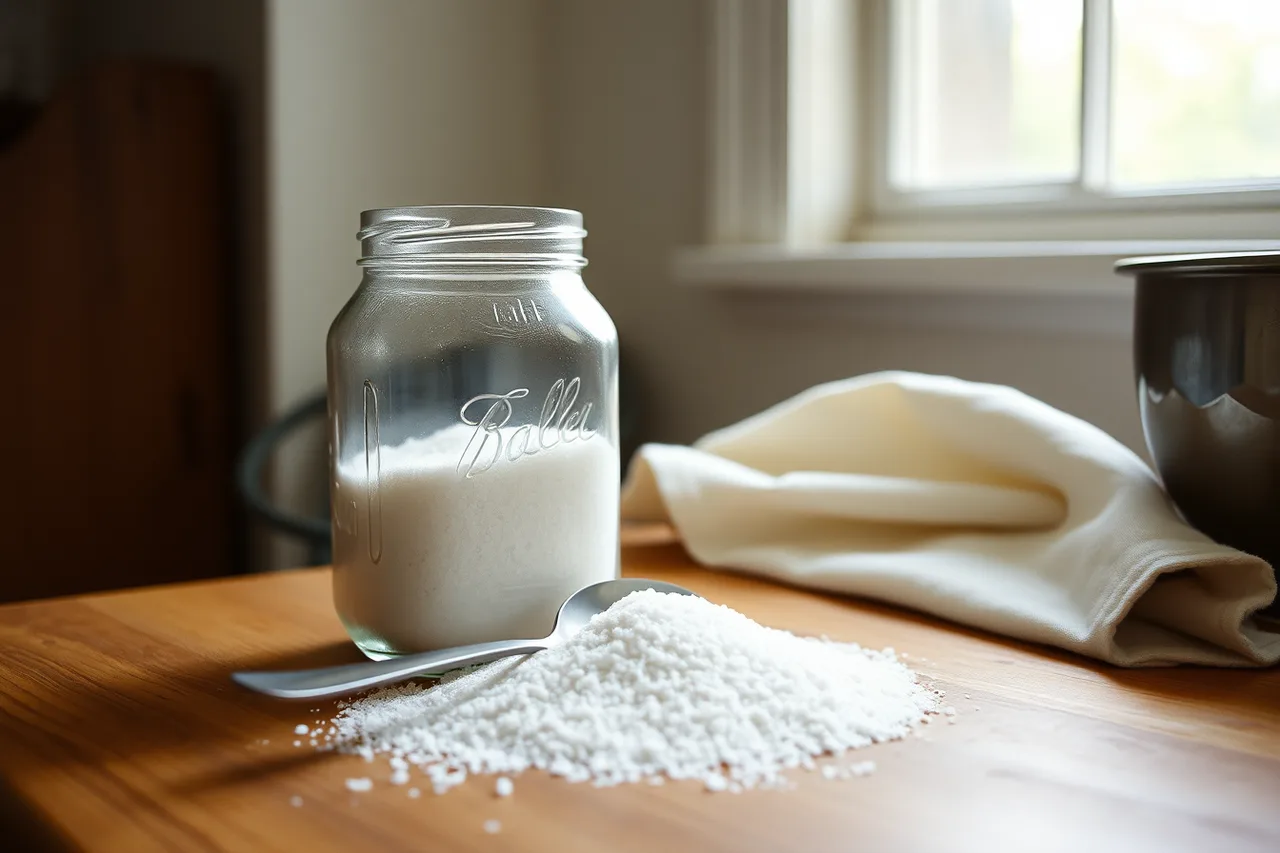
Reduced-sodium salt has its own rule: usable in some quick pickle recipes, never in fermented ones.
Jar and lid labels, and the half-gallon trap
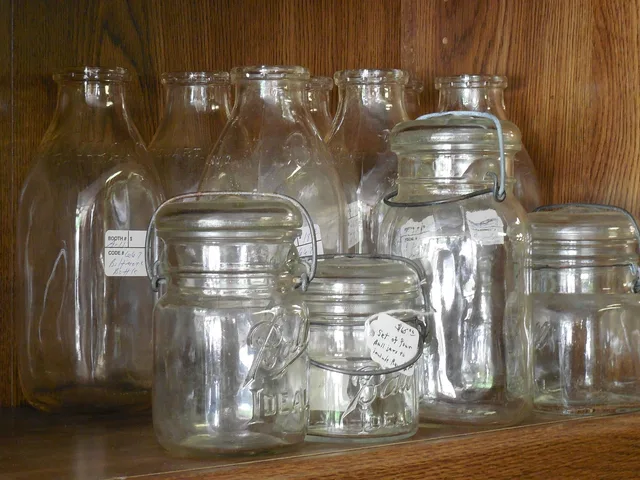
Penn State Extension's canning and freezing questions and answers addresses the half-gallon jar. At least one manufacturer sells half-gallon canning jars with a printed note that they are only for some highly acidic foods in a boiling water canner.
USDA, the National Center for Home Food Preservation, and the University of Georgia recommend only very acidic fruit juices for half-gallon jars. Boiling water processes for other foods cannot be extended to a larger jar by any formula.
That page also answers a question about stacking. Two layers of jars can be processed in a boiling water bath or a pressure canner, with a small wire rack between the layers.
Water must cover the tops of all jars by 1 inch in a boiling water canner. A pressure canner takes 2 to 3 inches of water.
What no label tells you
Ohio State University Extension's canning basics explains why the label can never be the last word. A sealed jar is not a sterile jar. It does not take long at 212 F to force air out and form a vacuum, but killing specific bacteria takes a specific amount of heat for a specific time.
Low-acid foods must reach 240 to 250 F in a pressure canner to destroy Clostridium botulinum. Canning low-acid foods in a boiling water canner is unsafe because 212 F is not high enough. When you mix low-acid and high-acid foods, assume the mixture is low-acid.
That is the claim no package will make for you. The label tells you what you bought; the tested recipe tells you what to do with it.
| Label | What to look for |
|---|---|
| Vinegar | 5 percent acidity or 50 grain |
| Salt | Canning or pickling, no additives |
| Jar | Mason type, size named in your recipe |
| Lid | Two-piece system, single-use flat lid |
| Commercial ferment | Refrigerated or shelf stable, and a date |
Buy from the recipe backward
Read the recipe, list the sizes and acidities it names, then shop. Our supply guide covers what each item does, and the piece on where money changes a ferment covers which upgrades are worth paying for.