Guides
Planning a full year of fermentation projects that each teach something
How to sequence fermentation projects across a year so each one teaches something, starting from the two vegetable ferments with research-tested home directions.
What to take away
- Only two vegetable ferments have research-based home directions behind them: sauerkraut and fermented pickles. Build the year around those and treat everything else as a refrigerator project.
- Sequence by season, not by ambition. Cabbage and pickling cucumbers arrive at different times, and both ferment badly when the kitchen is hot.
- Every project needs a decided ending before it startsrefrigerator, freezer, or canner. That choice changes the recipe you follow.
- Buy the scale and the thermometer first. They cost less than a crock and they are what make a batch repeatable.
Start with what has been tested
Penn State Extension's guide to fermenting sauerkraut and pickles states the limit directly: the only research-based recipes for fermented vegetables cover sauerkraut and fermented pickles. Everything else you see online, however appealing, sits outside that evidence.
That is not a reason to avoid other ferments. It is a reason to keep them cold, eat them soon, and never can them without a tested process. The gap between a refrigerated experiment and a shelf-stable jar is the whole of home fermentation safety.
Plan the year around temperature
Sauerkraut is fully fermented in about three to four weeks at 70 to 75 F, may take six weeks at 60 to 65 F, and may not ferment at all below 60 F. Above 80 F it can go soft and spoil. That set of numbers organizes a calendar better than any seasonal chart.
| Part of the year | What it suits |
|---|---|
| Late spring | Small jar batches while the kitchen is still cool |
| Peak summer | Quick refrigerator pickles; too warm for long ferments |
| Early autumn | Late-season cabbage for kraut, the traditional window |
| Winter | Canning finished ferments, testing equipment, reading |
Scale the first batches down
A gallon container per 5 pounds of vegetables is the working rule, and a 50 pound bag of cabbage yields 16 to 20 quarts of sauerkraut. Most households do not want 18 quarts of anything on a first attempt.
Crock vs Jar Fermentation
Crock
- Salt per 5 lb cabbage
- 3 tbsp
- Container size
- 1 gallon
- Submerging cabbage
- Easier
- Batch loss risk
- Lower
Jar
- Salt per 5 lb cabbage
- 3-1/2 tbsp
- Container size
- Quart or half-gallon
- Submerging cabbage
- Harder
- Batch loss risk
- Higher
Penn State gives a jar-scale version for this reason. Use 5 pounds of cabbage to 3-1/2 tablespoons of canning salt when fermenting in quart or half-gallon jars, rather than the 3 tablespoons used in a crock. Jar fermentation loses more batches, the guide warns, because keeping cabbage submerged is harder.
Decide the ending before the beginning
Virginia Cooperative Extension's fact sheet on making safe fermented foods and beverages frames home fermentation around three questions: safety, spoilage, and shelf life. It names Clostridium botulinum as the organism of concern in low-oxygen conditions, and says the conditions that keep it in check are high acid below pH 4.6, salting, or refrigeration.
Write the ending into the plan. A refrigerated jar can be an experiment. A shelf-stable jar cannot, because the only thing standing between it and a botulism risk is a tested process.
Build the year as a ladder
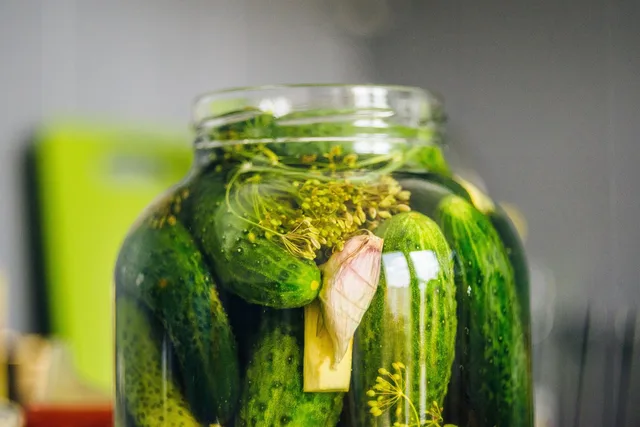
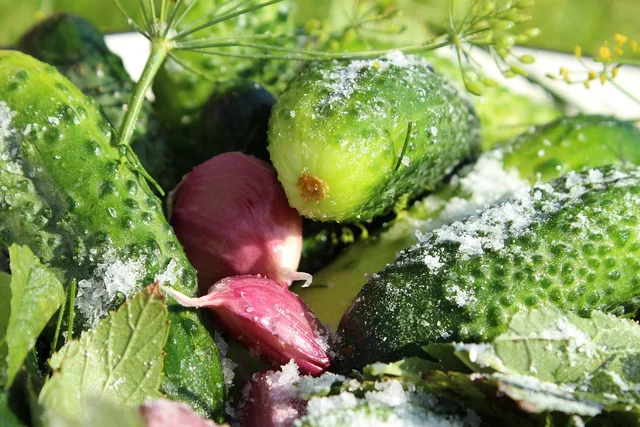
Make kraut in a jar. Then kraut in a crock. Then fermented dill pickles, which add brine measurement and a fixed cucumber size. Then canning a finished ferment, which brings in headspace, altitude, and process times. Four projects, each adding one variable.
Our starting point guide covers the underlying process, and the notes on building a tasting flight cover how to compare the results rather than just eating them.
Common questions
Can I ferment vegetables other than cabbage and cucumbers?
How many projects is realistic in a first year?
Do I need a crock at all?
When is the best time of year to start?
In this guide
- A practical fermentation project: sampling one batch of fermented dill pickles over timeSample one batch of fermented dill pickles at set intervals, record temperature, color, texture and sourness, then compare a canned jar with a refrigerated one.
- Fermentation projects: finding and checking tested recipesFor fermentation projects, brands are secondary: find tested recipes from USDA or extension sources, then check salt, temperature, and storage.
- Fermentation projects: what's worth buying, what isn'tWhy the fermentation projects price comparison misleads: salt type, vinegar acidity, a gram scale and a thermometer change results, not price tags.
- What a shop should stock for home canning: salt, vinegar, canners, and spare partsWhich salts and vinegars to shelve, how to advise on pressure and boiling water canners, and the replacement parts, jars, and items to refuse.
- Fermentation projects trends in home canning and fermentingFermentation projects trends: kimchi, kombucha, hot sauce and kvass on the rise, steam-canning guidance under USDA rules, and safety limits that hold.