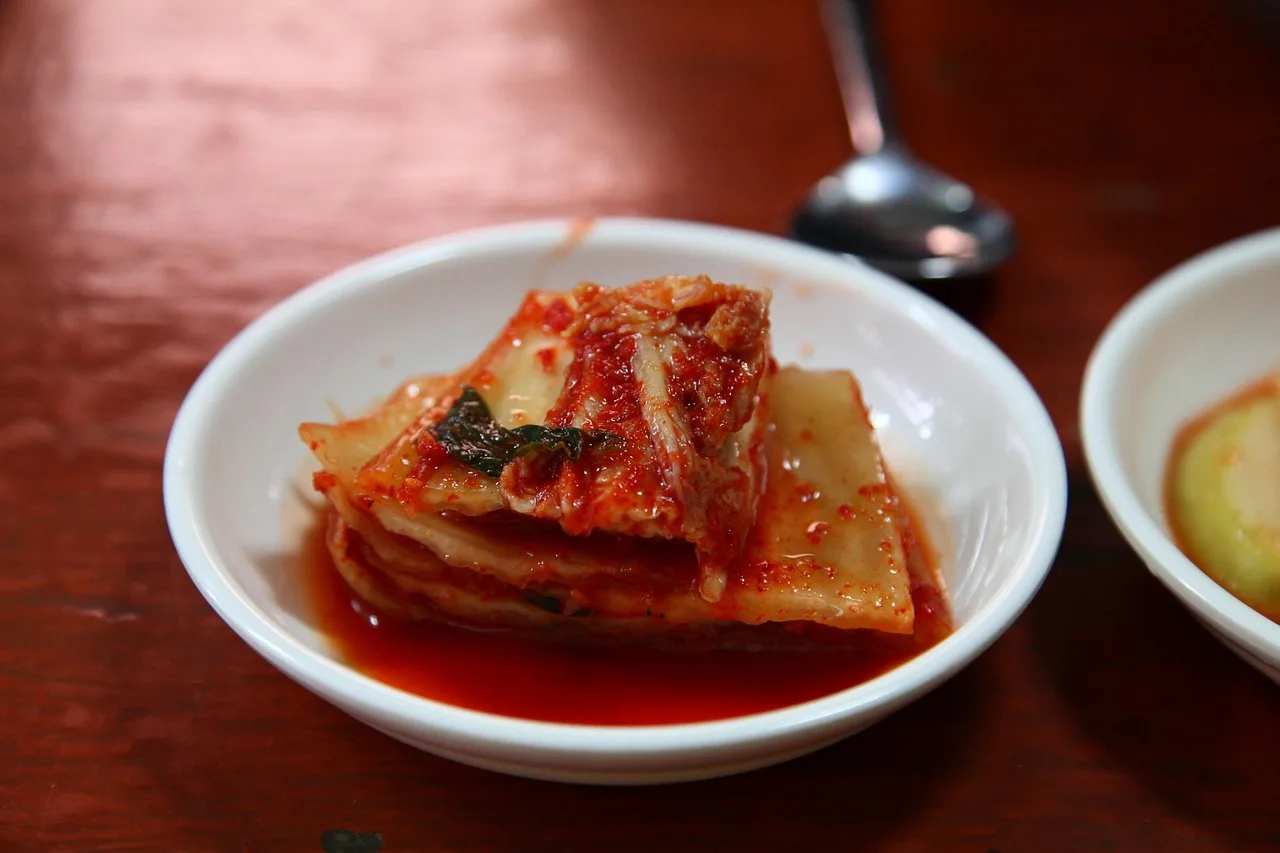
Features
Kimchi as the third vegetable ferment: short, then refrigerated
Kimchi as a third vegetable ferment: the OSU Extension salt range and pH, a one to two day room temperature ferment, then cold storage, beside sauerkraut.
What to take away
- Kimchi is a short ferment with a cold finish. Sauerkraut is a long acid build. They are different designs, not different levels of safety.
- Oregon State University Extension gives a final salt concentration of 2 to 5 percent and a target pH of 4.2.
- Kimchi ferments one to two days at room temperature, or longer in the refrigerator, then lives there and is best eaten within a week.
- It needs no starter culture, and garlic belongs in it only as part of the brine ferment, never as garlic in oil.
Why kimchi makes a good third project
Kimchi is a good third project because it teaches real technique without a canner. Sauerkraut and fermented dill pickles carry USDA-tested directions, and tested home directions stop there. Kimchi has none for shelf storage, because it is a refrigerated food by design, not by compromise.
Make kraut first, as the small batch fermenting walkthrough lays it out. Kimchi is the natural next step, and the point where vegetable ferments become a habit. Carrots, beans and radish are refrigerated only, but kimchi has guidance written for it.
Kimchi and sauerkraut side by side
Sauerkraut builds acid slowly and kimchi builds it quickly, and that difference drives every other choice. The USDA sauerkraut directions work 5 pounds of cabbage at a time with 3 tablespoons of salt, held at 70 to 75 F for about three to four weeks.
Sauerkraut
- Salt
- 3 tablespoons per 5 pounds of cabbage
- Time
- About three to four weeks at 70 to 75 F
- Finish
- Refrigerate for several months, or can
Kimchi
- Salt
- Final concentration of 2 to 5 percent
- Time
- One to two days at room temperature, or slower in the refrigerator
- Finish
- Refrigerated only, best eaten within a week
Sauerkraut fermentation by temperature
- 70-75 Fthree to four weeks
- 60-65 Ffive to six weeks
- below 60 Fmay not ferment
- above 75 Fmay go soft
Kraut timing swings with temperature. At 60 to 65 F it takes five to six weeks, below 60 F it may not ferment, and above 75 F it may go soft. Finished kraut keeps tightly covered in the refrigerator for several months or can be canned.
What the Extension guidance sets out
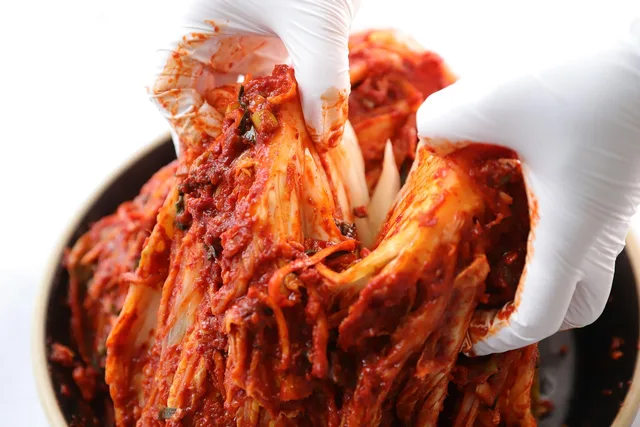
Oregon State University Extension's kimchi basics describes a short process built on brining. Salting the vegetables draws out water, which helps preservation and lets the seasonings penetrate over time. The final salt concentration ranges from 2 to 5 percent, and the target pH is 4.2.
Kimchi key numbers
- 2-5%final salt concentration
- 4.2target pH
- 1-2 daysroom-temperature ferment
- 1 weekbest eaten within
No starter culture is needed, because the bacteria that do the work are already on the vegetables. The acid comes from lactic and acetic acid, which bring the batch to its optimum pH of 4.2. Kimchi ferments at room temperature in only one to two days, or more slowly in the refrigerator.
Where kimchi sits on the map
Every vegetable ferment sits on one of two lines: shelf stable by a tested process, or refrigerated and eaten soon. Salt percentage and temperature separate the two, not the vegetable you chose. Kimchi lands on the refrigerated line, and so does most of what people ask about.
| Ferment | Where it sits |
|---|---|
| Sauerkraut | Tested directions; refrigerate or can |
| Fermented dill pickles | Tested directions; refrigerate or can |
| Kimchi | Short ferment, then refrigerated only |
| Fermented carrots, beans, radish, turnip | Refrigerated only; no tested canning process |
| Anything in oil | Separate risk; do not treat as a ferment |
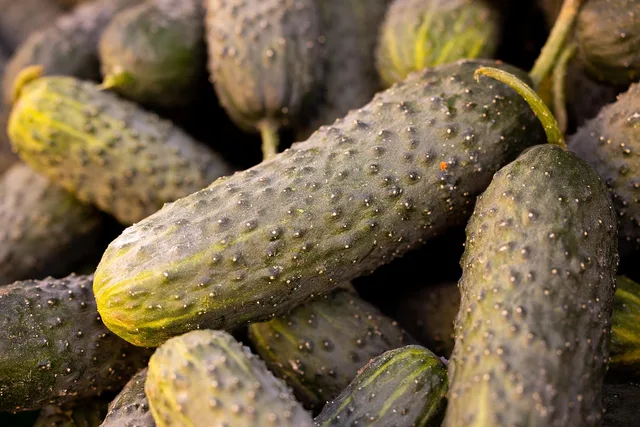
Fermented dill pickles follow the same shape as kraut, with a measured brine, 4 inch pickling cucumbers, and the blossom end removed. For carrots, beans, radish and turnip, no public tested shelf-storage figure exists, so follow the recipe's refrigerated time and keep them cold.
When to stop, and where it lives
For safety, kimchi is stored refrigerated and is best eaten within a week. Quality deteriorates with longer fermentation, so extra days on the counter are not a safety margin. How cold storage changes the bite is covered in storage choices that protect flavor.
A longer ferment is not safer beyond the point the recipe describes. Past that point you are trading texture and quality for nothing, so the recipe's days at room temperature are a ceiling to respect, not a minimum to exceed.
Garlic, oil and other additions
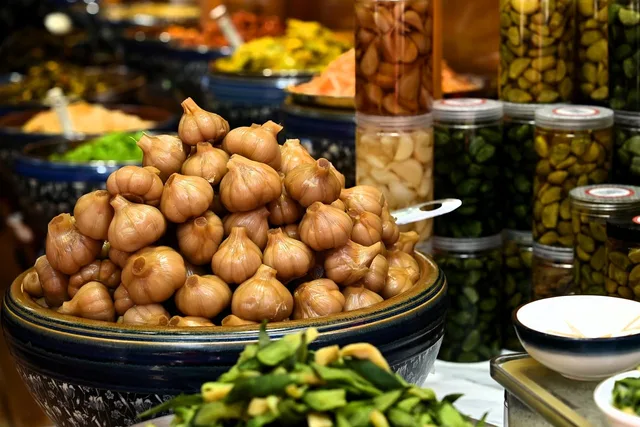
Kimchi variations are wide, but the evidence is narrow, so stay inside it. Garlic in brine is a refrigerated ferment. Garlic in oil is a different matter entirely and carries a real botulism risk without acidification, so it is not a ferment at all.
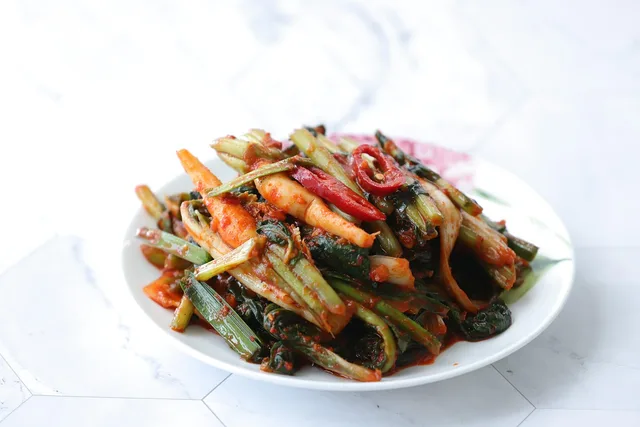
Oregon State notes more than 200 variations of kimchi. Classical baechu style uses Napa cabbage, radishes, green onions, garlic and ginger along with a specific red pepper. Vary those inside the salt range and the short ferment, and treat anything in oil as a separate risk, not a variation.
The same rule works on the tested recipes. Work variations into them rather than inventing new ferments: caraway or juniper in kraut, different dill forms in pickles, a mix of cabbage colors. That covers most of what people actually want without leaving the evidence behind.
More vegetable ferment ideas go into the variations, and a guide to buying produce that ferments well covers the part that decides texture before anything else does.
Common questions
Is kimchi less safe than sauerkraut?
No, it is a different design. Its safety comes from a short ferment followed by cold storage rather than from a long acid build.
Can I ferment carrots or green beans the same way?
Yes, as a refrigerated food. There is no tested home process for canning them as a fermented product, so do not put them on a shelf.
Why not a list of twenty vegetable ferments?
Because only sauerkraut and fermented dill pickles have research-tested home directions for shelf storage. A list of twenty would mean recommending processes nobody has tested, and the rest of the vegetables belong in the refrigerator.
Do I need a starter culture?
No. The bacterial cultures needed for fermentation are present on the raw ingredients, so a starter is unnecessary.
In this guide
- Vegetable ferment ideas options: flavors and cautionsVegetable ferment ideas options for seasoning kraut, dill pickles, and kimchi, with pepper cautions, refrigerator guidance, and allergen reminders.
- How to compare vegetable ferments one variable at a timeA practical guide to side by side tastings of vegetable ferments: change one variable, track temperature, taste blind, and judge sourness, salt, texture, and aroma.
- Why texture in a vegetable ferment gets decided at the shop, not the crockVegetable ferment ideas buying: texture is decided at the shop, not in the crock. The sizes, varieties, wax rules, and timing that separate a crisp fermented pickle.
- How small producers ferment vegetables, and what home cooks copy wrong in 2027Commercial vegetable fermentation is a controlled sequence of bacteria, not a craft mystery. What small makers actually control, and which parts do not scale down.
- Storage faults in a vegetable ferment: soft, dark and slimy krautSoft, dark or slimy kraut traced to its cause: how temperature, salt, trimming and brine level explain a vegetable ferment fault, and which ones mean discard.