Maintenance
What causes fermentation mistakes, and why they happen
What causes fermentation mistakes, and why they happen: soft pickles, hollow cucumbers, dark kraut, and slime all trace back to a short list of causes.
What to take away
- Most faults trace to four things: salt strength, temperature, air exposure, and how fresh the vegetables were.
- Soft or slippery pickles are the commonest failure, and if spoilage is evident the answer is to discard, not to rescue.
- Blossom ends carry an enzyme that softens pickles. Cutting off 1/16 inch is the cheapest fix in fermenting.
- Surface mold is not a cosmetic issue on a sweet spread. Mycotoxins have been found in jars of jelly with surface mold growth.
The short list of causes
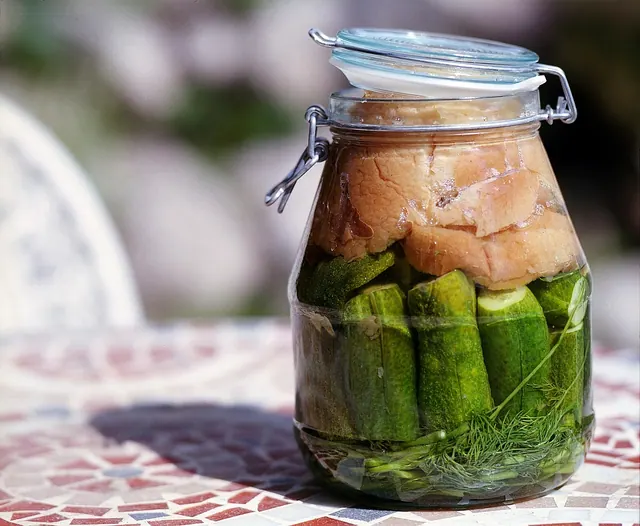
The National Center for Home Food Preservation's table of causes and solutions for problems with fermented pickles is the most useful page in home fermenting, because it maps symptoms back to decisions. Soft or slippery pickles follow from cucumbers stored too warm during fermentation, from pickles not processed properly, and from blossom ends left on. The fix for the last of those is to slice at least 1/16 inch off the blossom end and discard it. The fix for the first is to hold fermenting cucumbers between 70 and 75 F, which the same page describes as the optimum for the organisms you want.
Other faults have equally plain causes. Shriveled pickles come from placing cucumbers in too strong a brine, too heavy a syrup, or too strong a vinegar, and the answer is to follow a reliable recipe with the stated salt and sugar and vinegar at 5 percent acidity. Hollow cucumbers cannot be prevented after the fact; they usually float during washing, so pull them out and use them for relish. Fermentation should be started within 24 hours of harvest.
Faults and what they mean
| Fault | Usual cause | Verdict |
|---|---|---|
| Soft or slippery | Warm room, low salt, blossom end left on | Discard if spoilage is evident |
| Shriveled | Brine, syrup, or vinegar too strong | Quality fault, not a hazard |
| Hollow | Cucumber grown that way | Use for relish instead |
| Dark or discolored | Brass, copper, or zinc utensils; spices; hard water | Do not use if those metals were involved |
| Weak brine | Wild yeasts and bacteria feeding on the acid | Keep brine strength, finish the ferment |
Air is the fault you cause daily
A ferment held under brine is competing on your terms. A ferment with vegetables poking above the surface is competing on the mold's terms. Keeping cabbage and cucumbers 1 to 2 inches under brine, skimming surface scum promptly, and covering the container are the routine tasks that prevent most of what goes wrong.
Mold is not a cosmetic problem
The National Center's guidance on preventing spoilage makes the point about sweet spreads that applies more widely than people expect: research indicates the mold people usually scrape off the surface of jellies may not be as harmless as it seems, and mycotoxins have been found in some jars of jelly with surface mold growth. Because of possible mold contamination, paraffin or wax seals are no longer recommended for any sweet spread.
That is why the advice on a fermenting crock is to remove surface growth promptly rather than to let it establish, and why a mold that has grown into the food rather than sitting on the brine ends the batch.
When the answer is simply to stop
There is no technique for rescuing a batch that has gone soft and slimy, and no seasoning that makes a foul smell acceptable. Discard it, clean and sanitize the container, and start again with the numbers written down. Our starting point guide covers those numbers, and the small batch process guide covers running a jar where problems show up early.
Common questions
Can I save a soft batch by canning it? No. Canning fixes shelf stability, not spoilage that has already happened.
Is cloudy brine a fault? Not by itself in an active ferment. It is a fault when it comes from anti-caking agents in table salt.
Why did my pickles go dark? Often spices left loose in the brine, hard water, or reactive metal equipment. Use food-grade enamelware, glass, stainless steel, or stoneware.
My kraut lost brine as it fermented. What now? Top up with boiled and cooled brine at the recipe's concentration, never with plain water.