Industry
Part of What the documented botulism cases actually show
Home-canned meat and fresh fish: safety basics for kitchens
Pressure canning, a 10-minute boil before tasting, fish on ice within two hours: the meat and fish basics that keep a home or service kitchen safe.
Home-canned meat and fresh fish are where a kitchen's preserving habits matter most, because both are low-acid foods that give no reliable warning when something has gone wrong. This guide covers the basics: how meat is prepared and canned, how fish is handled from the catch to the freezer, and what that means for a kitchen that serves other people.
What to take away
- Meat, poultry, and game are low-acid foods and must be pressure canned at 10 to 15 pounds per square inch.
- Boil home canned meat and poultry for 10 minutes before tasting, even if it looks and smells all right.
- Fish handling starts at the catchon ice immediately, cleaned and dressed within 2 hours, used within 1 to 2 days.
- Serving preserved food you did not make to people who did not choose the risk is where a kitchen has to be strictest.
The meat rules a kitchen works to
Ohio State University Extension's canning meat, poultry, and game guide states the standard: use only healthy, disease-free animals' meat. Chill it immediately to 40 F or lower, and freeze at zero F for anything kept longer than a few days.
The national reference for these rules is the USDA Complete Guide to Home Canning, maintained by the National Center for Home Food Preservation.
Handle it fast, and keep everything that touches it clean. De-bone red meats and trim gristle, bruised spots, and excess fat, since fat left on meat may affect sealing.
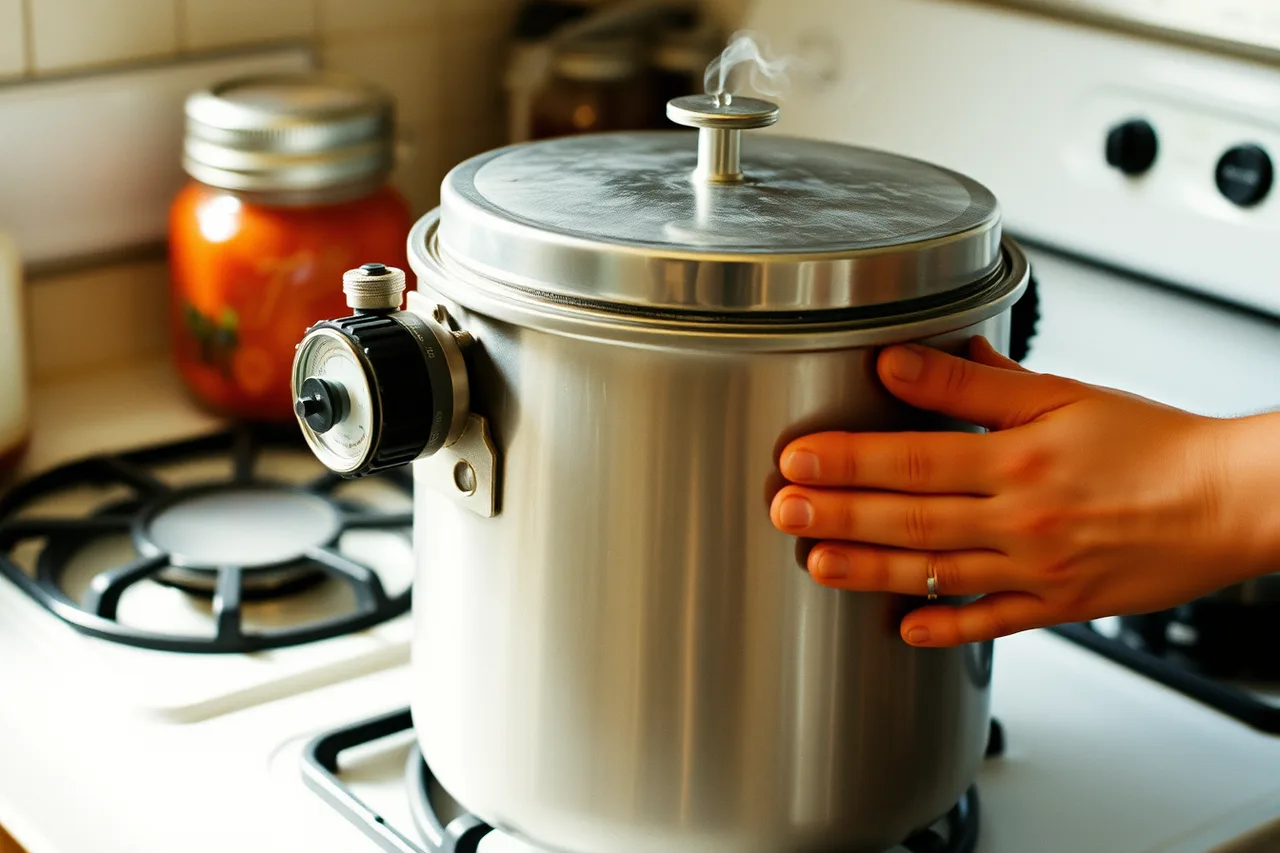
Then the line that decides the equipment: meat, poultry, and game are low-acid foods and must be processed in a pressure canner at 10 to 15 pounds of pressure per square inch for safety. Salt adds flavor but is not necessary for preservation.
The pressure figure is only half of the process. The processing time and the exact pressure depend on the food, the jar size, the altitude and whether the canner has a dial or a weighted gauge, so they come from the tested process for that product in the USDA guide, never from memory or a family recipe.
And the line that decides the service: when ready to serve, boil canned meat and poultry for 10 minutes before tasting, even if it looks and smells all right. The boil is the last barrier against the botulinum toxin that Clostridium botulinum can produce in low-acid canned food.
Fish, where the clock starts at the catch
Ohio State's guide to home preservation of fish shows how much preservation happens before preserving, and quality control starts as soon as fish are caught.
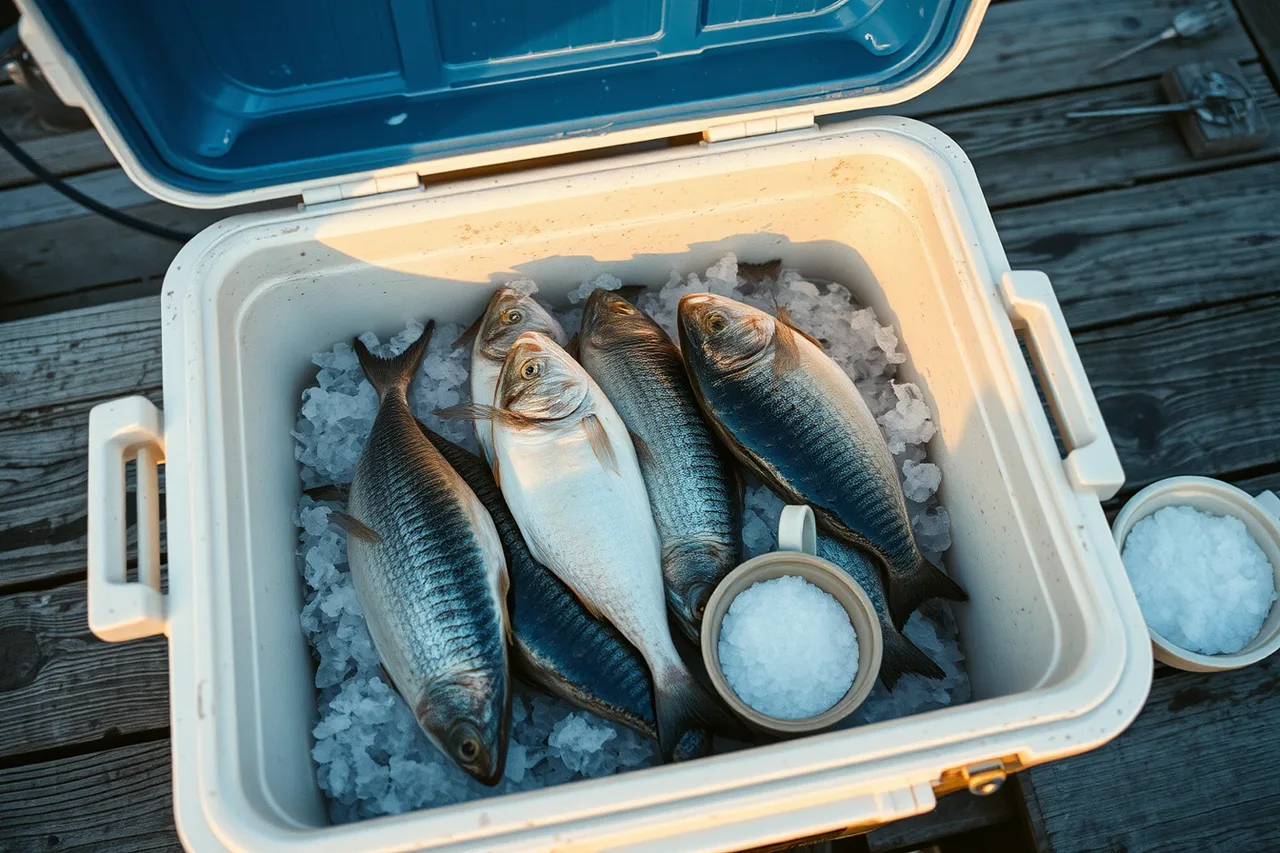
Handle them carefully because they bruise easily, and place them on ice immediately. Clean, dress, and wash them within 2 hours, then pack them in ice or refrigerate as soon as possible. Use fresh iced fish within 1 to 2 days.
For freezing, store at 0 F or below in airtight, vapor-proof packaging, in small or flat meal-sized packages. Lean fish are dipped in a mixture of 1/4 cup salt to 1 quart of cold water for 20 seconds.
Fat fish such as mullet, mackerel, trout, tuna, and salmon are dipped in 2 tablespoons of ascorbic acid to 1 quart of cold water for the same 20 seconds. Squeeze the air out, mark the date, and never freeze large containers of fish.
Why this cluster matters for anyone serving others
Why this cluster matters
| Situation | The standard that applies |
|---|---|
| Serving your own canned meat | Boil 10 minutes before tasting |
| Accepting a gift of home canned low-acid food | Ask what canner was used, or decline |
| Serving preserved fish | Handling record from catch to jar |
| Selling anything shelf stable | A documented, tested process, not a family recipe |
A restaurant, a bar, or a market stall carries a duty the home cook does not: the people eating did not choose the process. That is why professional kitchens are conservative about home-style preserved items, and why house-made preserves are usually refrigerated and short-dated rather than shelf stable.
Selling shelf-stable canned meat or fish moves the work out of home-canning guidance altogether. In the United States, commercially packed low-acid foods fall under the FDA's rules for thermally processed low-acid foods, 21 CFR Part 113, which require scheduled processes to be established by qualified persons with expert knowledge of thermal processing. A kitchen planning that step needs a process authority, not a recipe card.
The practical policy
Refuse shelf-stable low-acid items from unverified sources. Refrigerate what you make. Date everything. Throw out, unopened and untasted, any jar with a bulging or unsealed lid, leaking or spurting liquid, mold or an off smell, and remember that a jar can carry botulinum toxin with none of those signs, which is why the boil comes before tasting. Our background on how home preserving goes wrong covers the failures behind that policy.
![500px provided description: Canning [#jar ,#tomatoes ,#canning]. Tomato Canning Jar Labels: What to Record and Why](/covers/what-labels-can-tell-you-about-home-ferment-case-studies-640.webp?v=73619010)