Reviews
Part of Home fermentation, from a jar of kraut to the canning safety line
What to write on the jar, and what a label cannot tell you: what actually matters
A home ferment label is a record, not a claim. What to write on it, how long the contents actually keep, and the limits of any label as evidence of safety.
What to take away
- Write the date on every jar, home canned or frozen. Rotate oldest first, and can only what you will use inside a year.
- Record the salt weight, the room temperature, and the recipe source. Those three explain almost every difference between batches.
- Store canned jars between 40 and 70 F, away from light, and never above 90 F where seals can fail.
- A label proves nothing about safety. The tested recipe and the process behind the jar do that.
The label is a record for you
A home fermentation label answers questions you will actually ask in three months. What was in it. When it started. When it went cold or into the canner. Which recipe. What salt, by weight, not by spoon. Anything you leave off you will guess at later, and guessing is how a batch that worked becomes impossible to repeat.
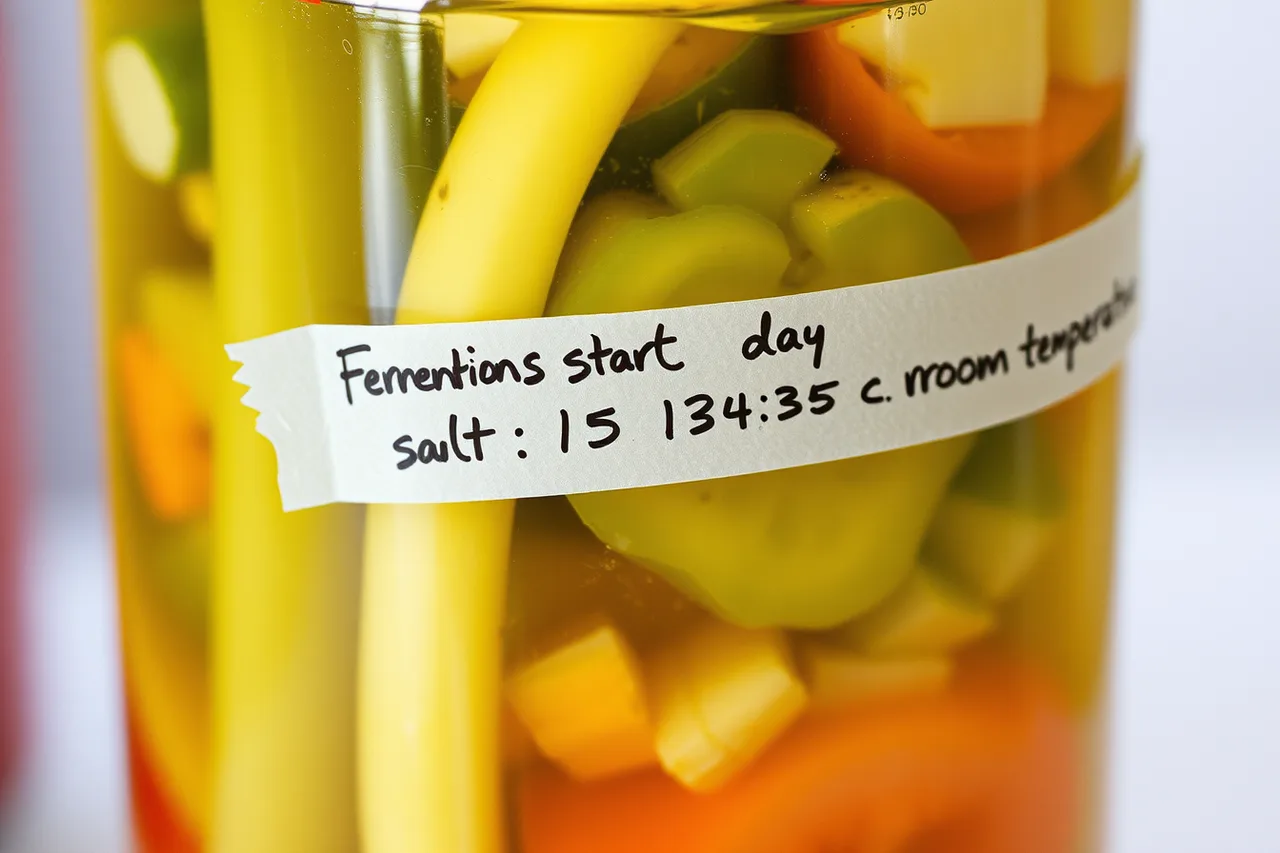
A useful minimum on masking tape:
- Contents and any added spices
- Date the fermentation started and the date it was jarred or canned
- Salt weight or percentage
- Room temperature during fermentation
- Recipe source, by name
What the storage clock actually is
Penn State Extension's storage guidelines for home preserved foods put numbers on it. Most canned goods hold quality up to a year, so can only what you will use in that time. Date canned and frozen foods, rotate oldest first.
Store jars in a cool, dry, dark place between 40 and 70 F. Avoid storage above 90 F, near heating pipes or direct sunlight, where jars can spoil and release their seal.
Quality and safety are separate clocks. Foods canned to USDA recommendations stay safe as long as the seal holds, but firmness, color, and flavor fall away over time.
What a commercial label has to carry
Rules differ by state, but the pattern is consistent: producer name and address, ingredients, allergens, and a date. Illinois Extension's cottage food guidance on following the recipe goes further for this category.
A fermented or acidified product must use an approved tested recipe followed exactly, or else an annual written food safety plan with pH testing filed on a set cycle. It also repeats the rules that govern the jar itself: do not alter the vinegar, food, or water proportions, and use only vinegar of 5 percent acidity.
What no label can tell you
A label cannot tell you the finished pH, whether the vegetables stayed submerged, or whether the room ran hot in week two. On a commercial jar it cannot tell you whether the product is shelf stable by process or simply kept cold. On your own jar it cannot tell you anything you did not write down.
This is the honest limit. If a jar has no record and you cannot reconstruct how it was made, discard it rather than reason your way to confidence.
Keep the record with the plan
Labels work best as the tail end of a plan you made before shopping. Our starting point for home fermentation covers the numbers worth recording, and the realistic plan for fermentation projects covers sequencing batches so the labels stay meaningful across a season.