Reviews
Part of Home fermentation, from a jar of kraut to the canning safety line
4 takeaways on home fermentation pairings
Home fermentation pairing ideas: heat, salt, and acid decide whether a spoonful of kraut lifts a plate or flattens it. How to serve a live ferment.
What to take away
- Live cultures do not survive cooking. If the point of the jar is the culture, add it off the heat.
- A ferment is a salt and acid delivery system. Budget for it in the dish rather than salting twice.
- Canning a finished ferment trades the live culture for a shelf-stable jar and a year of good quality. That is a real trade, not a downgrade.
- Fermented kraut and dill pickles have tested boiling water canner processes. Nothing else in your refrigerator does unless a tested recipe says so.
Cold plate first, hot pan last
The simplest rule: anything you want tangy and crunchy goes on at the end. Kraut stirred into a stew at the start becomes a limp sour vegetable. The same kraut spooned on afterward keeps its bite and its acidity. Fermented pickles behave the same way, which is why they turn up alongside rich food rather than inside it.
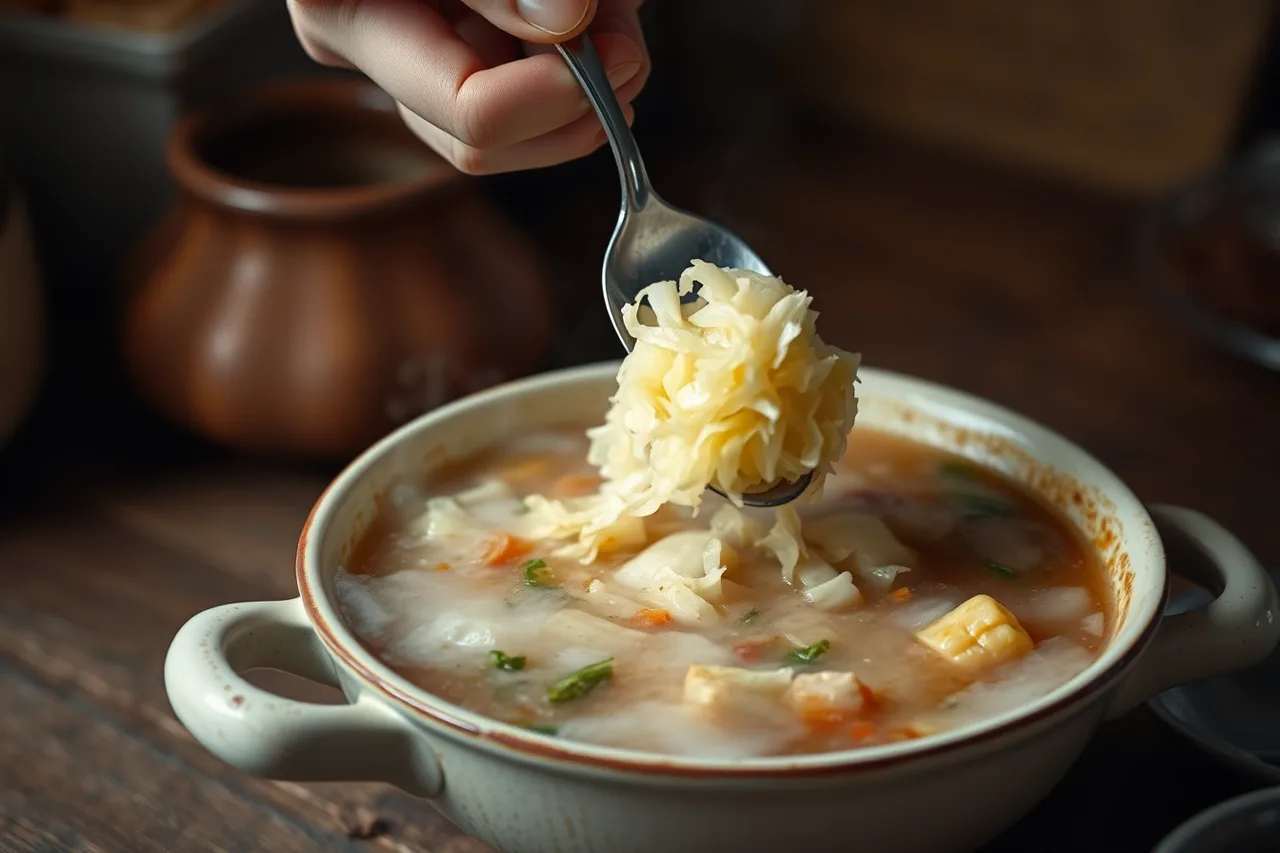
If you do cook a ferment, do it on purpose. Braised kraut is a real dish; it just is not the same food as the jar it came from.
Let the acid do the work of the dressing
Acid is the reason a spoon of ferment rescues a heavy plate. Practical pairings that lean on that:
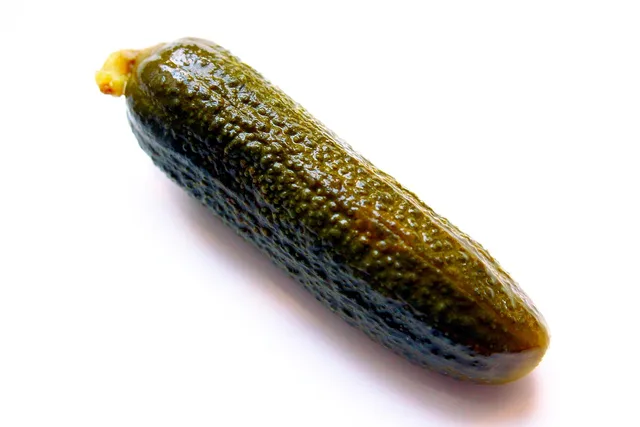
- Kraut or fermented cucumber with fatty pork, sausage, or oily fish
- A chopped ferment folded into a grain bowl in place of vinaigrette
- Fermented brine used as the acid in a salad dressing, made fresh and eaten the same day
- A small pile of ferment next to beans or lentils, where the sourness reads as seasoning
Because the jar is already salty, taste before you add salt to the rest of the plate. Most people over-salt the first few times.
Raw jar or canned jar
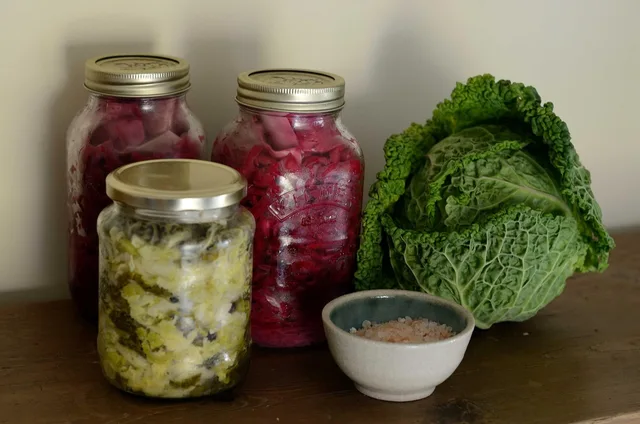
Clemson Extension's guide to fermenting sauerkraut gives both endings. Fully fermented kraut keeps tightly covered in the refrigerator for several months.
It can also be canned in a boiling water bath: hot packed for 10 minutes in pints and 15 in quarts, or raw packed for 20 and 25 minutes. The guide notes a properly run kraut fermentation brings the food to pH 4.6 or below, the acid level that makes the boiling water process appropriate.
Canning stops the culture. It also stops the slow drift toward sharper flavor and lets you store the jar out of the refrigerator. Decide which of those matters to you before you fill the canner.
Storage sets the serving window
University of New Hampshire Extension's note on fermenting gives the same endpoint. After fermentation, refrigerate the product, or store it in a cool dry place if safely canned.
Properly home-canned products hold best quality about a year. A refrigerated jar keeps changing, so plan menus around it instead of saving it for a special occasion two months out.
Our starting point for home fermentation covers the process that gets you here, and the guide to what supplies actually cost covers the salt and vinegar side of the shopping list.