Reviews
Part of Planning a full year of fermentation projects that each teach something
What a shop should stock for home canning: salt, vinegar, canners, and spare parts
Which salts and vinegars to shelve, how to advise on pressure and boiling water canners, and the replacement parts, jars, and items to refuse.
What to take away
- Stock canning and pickling salt, and stock vinegar labeled 5 percent acidity. Those two lines carry more safety weight than anything else on the shelf.
- Sell dial-gauge pressure canners only alongside information about annual gauge testing. A gauge off by more than 2 pounds should be replaced.
- Do not sell electric multicookers as canners. Extension services do not recommend them for canning.
- Carry replacement gaskets, plugs, and lids. Most canner failures are a worn part, not a worn canner.
The two lines that matter most
Salt and vinegar look like grocery items and behave like safety equipment. Canning or pickling salt has no anti-caking agent and no iodine. Vinegar must be 5 percent acidity, sometimes labeled 50 grain. A customer who buys flake salt and a 4 percent vinegar has already lost the batch, and possibly more than the batch.
Shelve both next to the jars rather than in the seasoning aisle, and keep the acidity figure visible on the shelf label.
Canners: what to stock and what to say
Illinois Extension's page on pressure canners sets out the reasoning a shop needs. Pressure canning is the only safe method for low-acid foods. Only a pressure canner reaches 240 F, the temperature that destroys Clostridium botulinum spores.
Boiling water never exceeds 212 F at sea level, however long it boils. Dial gauges drift, should be tested every year, and should be replaced if off by more than 2 pounds. Weighted gauges do not need testing. Electric pressure cookers are not recommended for canning.
- Dial gauge cannerpoint customers at local extension testing
- Weighted gauge cannerno annual test needed
- Boiling water cannerhigh-acid and acidified foods only
- Atmospheric steam cannerhigh-acid and acidified foods, short processes only
Stock the parts, not just the units
Penn State Extension's pre-season checklist for summer canning is effectively a parts list. Gaskets should be flexible rather than brittle, sticky, or cracked. Buyers need the canner brand and model number to get the right one. Pressure release plugs are often bundled with gasket packs.
Vent ports must be clear all the way through when held to the light. Boiling water canners must be deep enough for one to two inches of water above the jar tops, which rules out some shallow jam canners for quart jars.
That guidance also settles a jar question shops get asked constantly. Processing times have not been developed for many foods in half-pint, 12-ounce, or 24-ounce jars. Half-gallon jars are only suitable for very acid juices such as apple and grape.
What to refuse politely
Used jars with chipped sealing edges, which will not seal. Very old crocks with unknown glaze, since lead was common before the 1970s. Single-piece lids in place of the two-piece metal lids USDA recommends. Recipe cards of unknown origin sold next to the equipment. None of these need a lecture from staff, only a shelf they are not on.
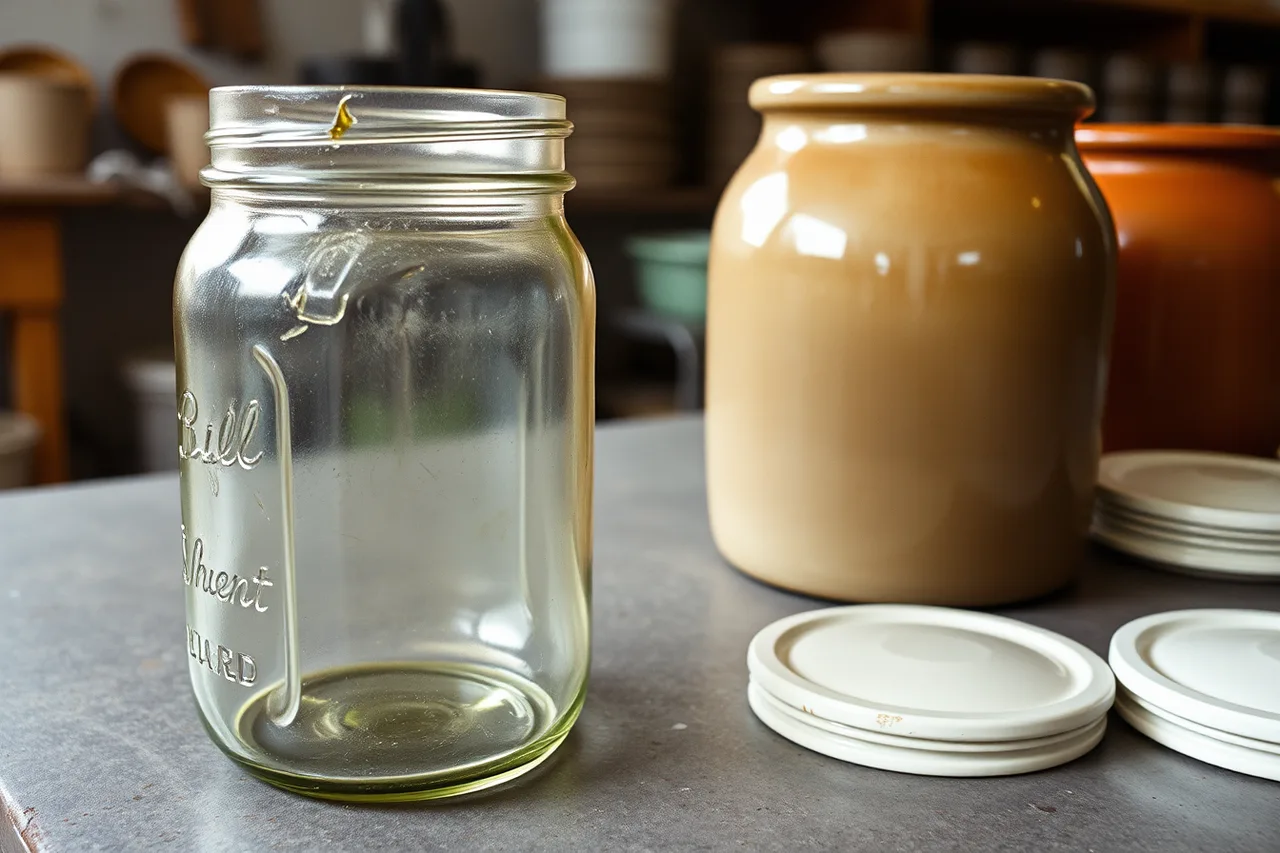
The same goes for the aspirational end of the range. A customer who has never fermented does not need a 10 gallon crock, and selling one guarantees a bad first experience with 50 pounds of cabbage in it.
Sell information with the hardware
A tested recipe leaflet costs nothing and prevents most of the returns. Our realistic project plan covers how a customer should sequence their year, and the comparison of fermentation jars covers the vessel questions staff get asked most.